

DiscoverSpeciesSharks and rays
Blackbelly dogfish
Etmopterus hillianus
- Usual depth338–1,000 m
- Water temperature9–28 °C
- Best monthsOctober, November, and December
- How commonRare
Photo credit: (c) NOAANMFSMississippi Laboratory, some rights reserved (CC BY) · CC BY · iNaturalist
About this species
The Caribbean lanternshark is a shark of the family Etmopteridae found in the eastern and western Atlantic at depths between 180 and 720 m. Its length is up to 50 cm.
Text from the Wikipedia article “Caribbean lanternshark”, licensed CC BY-SA 4.0. Read the article
Where and when
Where it has been recorded
Worldwide
Loading the map
Best months
Worldwide (open data)
- January: 1 records
- February: 2 records
- March: 1 records
- April: 0 records
- May: 5 records
- June: 5 records
- July: 3 records
- August: 4 records
- September: 3 records
- October: 6 records
- November: 6 records
- December: 7 records
Depth and water temperature
Depth
Mostly recorded at 338–1,000 m · Deepest record: 1,050 m
Water temperature
Recorded in surface water of 9–28 °C
Names and classification
- English
- Blackbelly dogfish, blackbelly dogfish, Caribbean lanternshark
Names in 4 more languages
- German
- Karibischer Laternenhai
- Spanish
- galludo enano, Tollo Lucero Antillano
- French
- Sagre Antillais
- Japanese
- カリブカラスザメ
Other scientific names: Spinax hillianus
Similar species
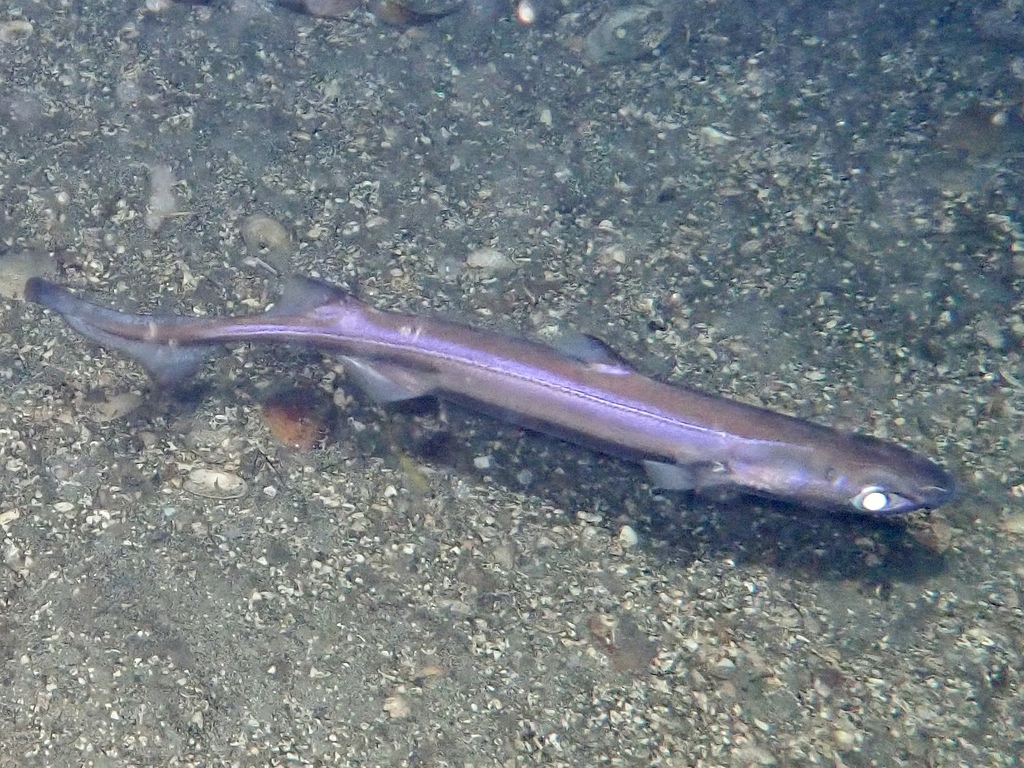 Velvet belly
Etmopterus spinax
- Southern lanternshark
Etmopterus granulosus
- Blackbelly lanternshark
Etmopterus lucifer
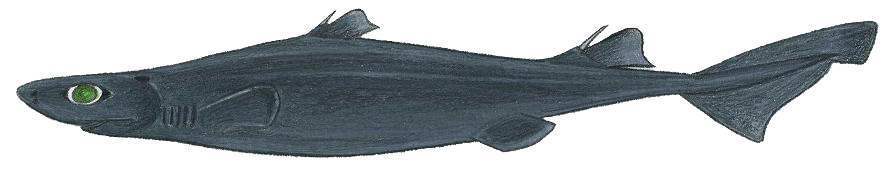 Great lanternshark
Etmopterus princeps
- Black-bellied Deep-sea Dogifsh
Etmopterus molleri
- Slender lanternshark
Etmopterus pusillus
Sources and credits
Names and taxonomy: WoRMS (CC BY 4.0) and the GBIF Backbone (CC BY 4.0). Photos: iNaturalist observers, each under the licence shown (CC0, CC BY or CC BY-SA).
- Depth, temperature, months and maps: records from OBIS and GBIF under CC0 or CC BY.
- Descriptions: Wikipedia, licensed CC BY-SA, each linked to its article.
- Conservation status as published by GBIF (IUCN Red List).
- 69 open-data records from 1886 to 1987.
- Species data updated November 2, 2026.
Log what you see on your next dive
The free DiveHive diver app keeps your logbook with every sighting and shows what lives at the site you dive next.