
DiscoverSpeciesSharks and rays
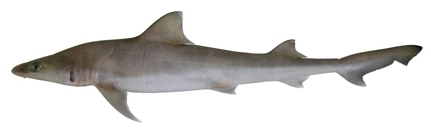
Australian Weasel Shark
Hemigaleus australiensis
- Usual depth8–44 m
- Water temperature22–29 °C
- Best monthsSeptember, October, and November
- How commonOccasional
Photo credit: (c) CSIRO National Fish Collection, some rights reserved (CC BY) · CC BY · iNaturalist
About this species
The Australian weasel shark is an uncommon species of ground shark in the family Hemigaleidae. It inhabits shallow waters off northern Australia to a depth of 170 m (560 ft); smaller sharks frequent sand and seagrass habitat and shift to coral reefs as they grow older. A slim, drab species reaching a length of 1.1 m (3.6 ft), it has sickle-shaped fins with dark tips on the second dorsal fin and caudal fin upper lobe. Its upper teeth are broad with strong serrations only on the trailing edge. The lateral line along each side is prominent and exhibits a downward curve below the second dorsal fin.
Text from the Wikipedia article “Australian weasel shark”, licensed CC BY-SA 4.0. Read the article
Where and when
Where it has been recorded
Worldwide
Loading the map
Best months
Worldwide (open data)
- January: 175 records
- February: 97 records
- March: 32 records
- April: 37 records
- May: 46 records
- June: 77 records
- July: 47 records
- August: 189 records
- September: 257 records
- October: 243 records
- November: 215 records
- December: 193 records
Depth and water temperature
Depth
Mostly recorded at 8–44 m · Deepest record: 167.5 m
Water temperature
Recorded in surface water of 22–29 °C
Names and classification
- English
- Australian Weasel Shark, Sickelfin Weasel Shark, Weasel Shark
Names in 2 more languages
- German
- Australischer Wieselhai
- Japanese
- オーストラリアヒレトガリザメ
Similar species
- Sickelfin Weasel Shark
Hemigaleus microstoma
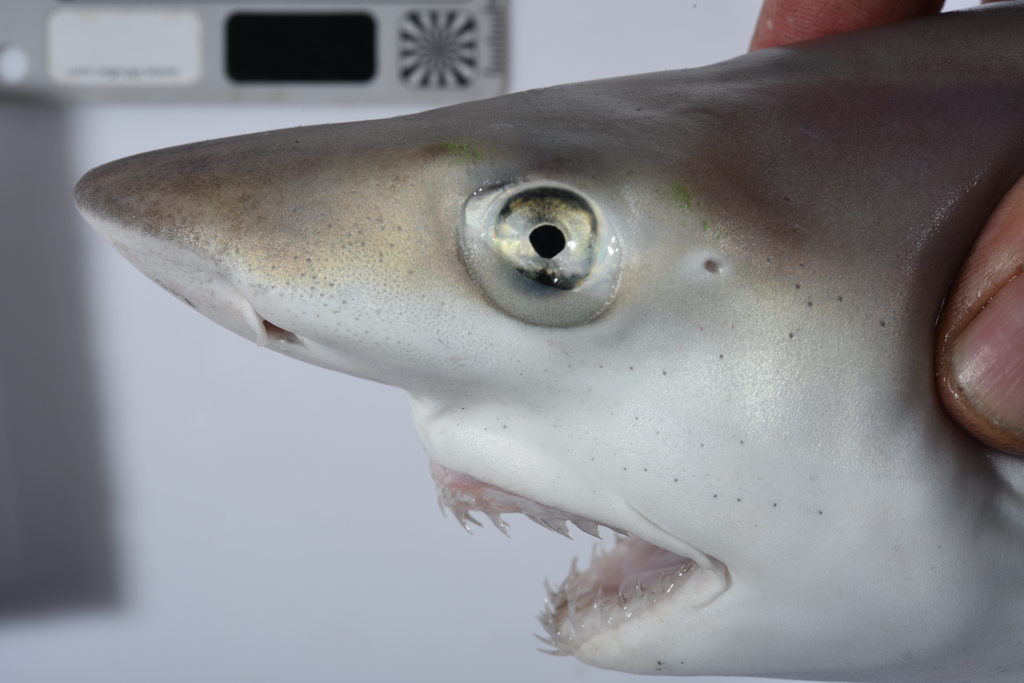 Fossil Shark
Hemipristis elongata
- hooktooth shark
Chaenogaleus macrostoma
Sources and credits
Names and taxonomy: WoRMS (CC BY 4.0) and the GBIF Backbone (CC BY 4.0). Photos: iNaturalist observers, each under the licence shown (CC0, CC BY or CC BY-SA).
- Depth, temperature, months and maps: records from OBIS and GBIF under CC0 or CC BY.
- Descriptions: Wikipedia, licensed CC BY-SA, each linked to its article.
- Conservation status as published by GBIF (IUCN Red List).
- 1,728 open-data records from 1943 to 2023.
- Species data updated November 3, 2026.
Log what you see on your next dive
The free DiveHive diver app keeps your logbook with every sighting and shows what lives at the site you dive next.