
DiscoverSpeciesSharks and rays
Fossil Shark
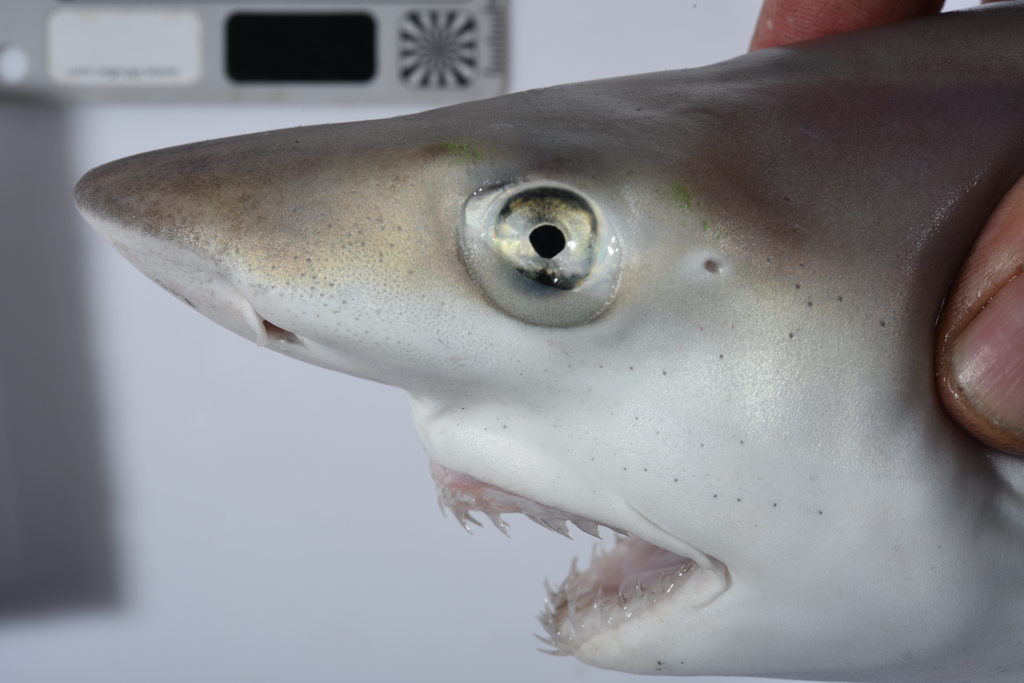
Hemipristis elongata
- Usual depth15–106 m
- Water temperature20–29 °C
- Best monthsAugust, September, and October
- How commonRare
Photo credit: no rights reserved · CC0 1.0 · iNaturalist
About this species
The snaggletooth shark, or fossil shark, is a species of weasel shark in the family Hemigaleidae, and the only extant member of the genus Hemipristis. It is found in the Indo-West Pacific, including the Red Sea, from southeast Africa to the Philippines, north to China, and south to Australia, at depths from 1 to 130 meters. This shark prefers the bottom of the water column in coastal areas, but can be found on continental and insular shelves as well. Its length is up to 240 cm (7.87 ft).
Text from the Wikipedia article “Snaggletooth shark”, licensed CC BY-SA 4.0. Read the article
Where and when
Where it has been recorded
Worldwide
Loading the map
Best months
Worldwide (open data)
- January: 12 records
- February: 4 records
- March: 6 records
- April: 10 records
- May: 6 records
- June: 5 records
- July: 2 records
- August: 15 records
- September: 15 records
- October: 25 records
- November: 11 records
- December: 5 records
Depth and water temperature
Depth
Mostly recorded at 15–106 m · Deepest record: 144 m
Water temperature
Recorded in surface water of 20–29 °C
Names and classification
- English
- Fossil Shark, snaggletooth shark
Names in 1 more languages
- Simplified Chinese
- 大鯊條, 尖鰭副沙條鮫, 沙條, 鈍吻鯊(半鋸鯊), 長半鋸鯊, 鯊條
Other scientific names: Carcharias ellioti, Dirrhizodon elongatus, Hemipristis elongatus, Hemipristis pingali, Heterogaleus ghardaqensis, Paragaleus acutiventralis
Similar species
 Australian Weasel Shark
Hemigaleus australiensis
- hooktooth shark
Chaenogaleus macrostoma
- Sickelfin Weasel Shark
Hemigaleus microstoma
Sources and credits
Names and taxonomy: WoRMS (CC BY 4.0) and the GBIF Backbone (CC BY 4.0). Photos: iNaturalist observers, each under the licence shown (CC0, CC BY or CC BY-SA).
- Depth, temperature, months and maps: records from OBIS and GBIF under CC0 or CC BY.
- Descriptions: Wikipedia, licensed CC BY-SA, each linked to its article.
- Conservation status as published by GBIF (IUCN Red List).
- 148 open-data records from 1871 to 2022.
- Species data updated November 3, 2026.
Log what you see on your next dive
The free DiveHive diver app keeps your logbook with every sighting and shows what lives at the site you dive next.