
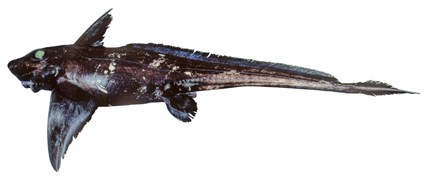
Black Chimaera
Hydrolagus homonycteris
- Usual depth1,069–1,396 m
- Water temperature10–19 °C
- Best monthsMarch and May
- How commonRare
Photo credit: (c) CSIRO National Fish Collection, some rights reserved (CC BY) · CC BY · iNaturalist
About this species
The black ghostshark, also known as the black chimaera, is a chimaera species within the family Chimaeridae. The species lives off the coasts of Australia and New Zealand, in the southwestern Pacific Ocean, in depths of 500–1,450 m (1,640–4,760 ft). It has a black or dark brown body; males have a total length of 108 cm (43 in). The species is closely related to the abyssal ghostshark. Although it is sometimes caught as a bycatch, it does not have any major threats and is listed as least concern by the International Union for Conservation of Nature (IUCN).
Text from the Wikipedia article “Black ghostshark”, licensed CC BY-SA 4.0. Read the article
Where and when
Where it has been recorded
Worldwide
Loading the map
Best months
Worldwide (open data)
- January: 1 records
- February: 0 records
- March: 7 records
- April: 3 records
- May: 6 records
- June: 1 records
- July: 0 records
- August: 0 records
- September: 1 records
- October: 0 records
- November: 0 records
- December: 1 records
Depth and water temperature
Depth
Mostly recorded at 1,069–1,396 m · Deepest record: 1,606 m
Water temperature
Recorded in surface water of 10–19 °C
Names and classification
- English
- Black Chimaera, Black Ghostshark
Names in 1 more languages
- Spanish
- Quimera Negra
Similar species
 Ratfish
Hydrolagus colliei
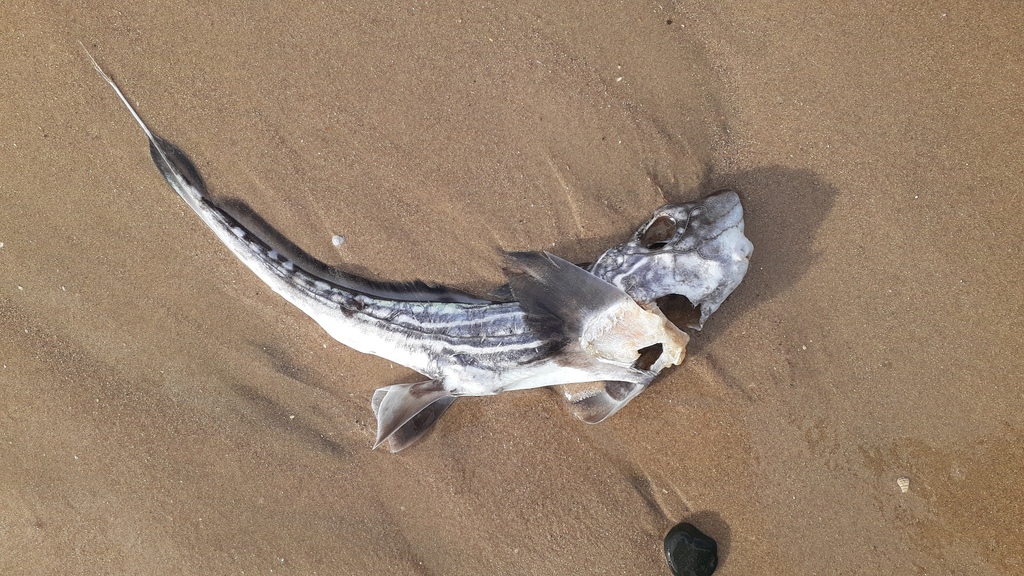 Dark Chimaera
Hydrolagus novaezealandiae
- Pale Brown Chimaera
Hydrolagus bemisi
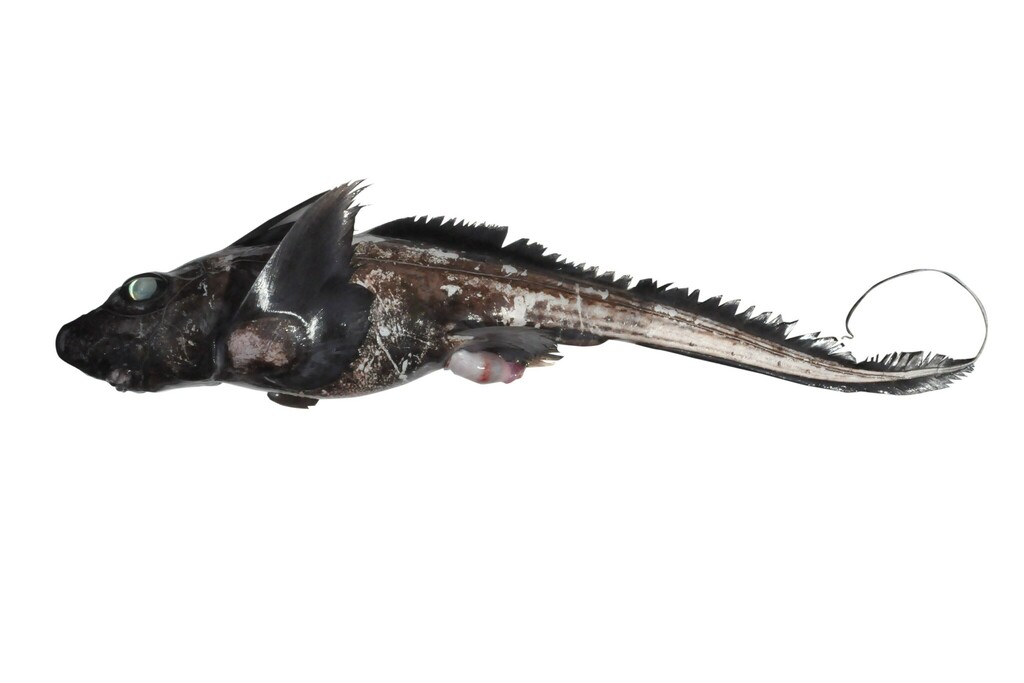 African chimaera
Hydrolagus africanus
- Philippine Chimaera
Hydrolagus deani
- Marbled Ghostshark
Hydrolagus marmoratus
Sources and credits
Names and taxonomy: WoRMS (CC BY 4.0) and the GBIF Backbone (CC BY 4.0). Photos: iNaturalist observers, each under the licence shown (CC0, CC BY or CC BY-SA).
- Depth, temperature, months and maps: records from OBIS and GBIF under CC0 or CC BY.
- Descriptions: Wikipedia, licensed CC BY-SA, each linked to its article.
- Conservation status as published by GBIF (IUCN Red List).
- 481 open-data records from 1983 to 2018.
- Species data updated November 3, 2026.
Log what you see on your next dive
The free DiveHive diver app keeps your logbook with every sighting and shows what lives at the site you dive next.