
Bony-headed pipefish
Nannocampus subosseus
- Usual depth2–12 m
- Water temperature18–23 °C
- Best monthsApril
- How commonRare
About this species
Nannocampus subosseus, also known as the bony-headed pipefish, is a species of marine fish belonging to the family Syngnathidae. They can be found inhabiting reefs and tide pools only in the region of Shark Bay to Esperance, Western Australia. Members of this species can grow to lengths of 12 cm and their diet likely consists of small crustaceans such as copepods. Reproduction occurs through ovoviviparity in which the males brood eggs before giving live birth.
Text from the Wikipedia article “Nannocampus subosseus”, licensed CC BY-SA 4.0. Read the article
Where and when
Where it has been recorded
Worldwide
Loading the map
Best months
Worldwide (open data)
- January: 0 records
- February: 0 records
- March: 1 records
- April: 4 records
- May: 0 records
- June: 0 records
- July: 0 records
- August: 1 records
- September: 0 records
- October: 0 records
- November: 1 records
- December: 0 records
Depth and water temperature
Depth
Mostly recorded at 2–12 m · Deepest record: 12 m
Water temperature
Recorded in surface water of 18–23 °C
Names and classification
- English
- Bony-headed pipefish, Bonyhead Pipefish
Names in 1 more languages
- Simplified Chinese
- 硬头南海龙, 硬頭南海龍
Similar species
 Painted Reef Pipefish
Nannocampus pictus
- Elegant pipefish
Nannocampus elegans
- Lindeman Island Pipefish
Nannocampus lindemanensis
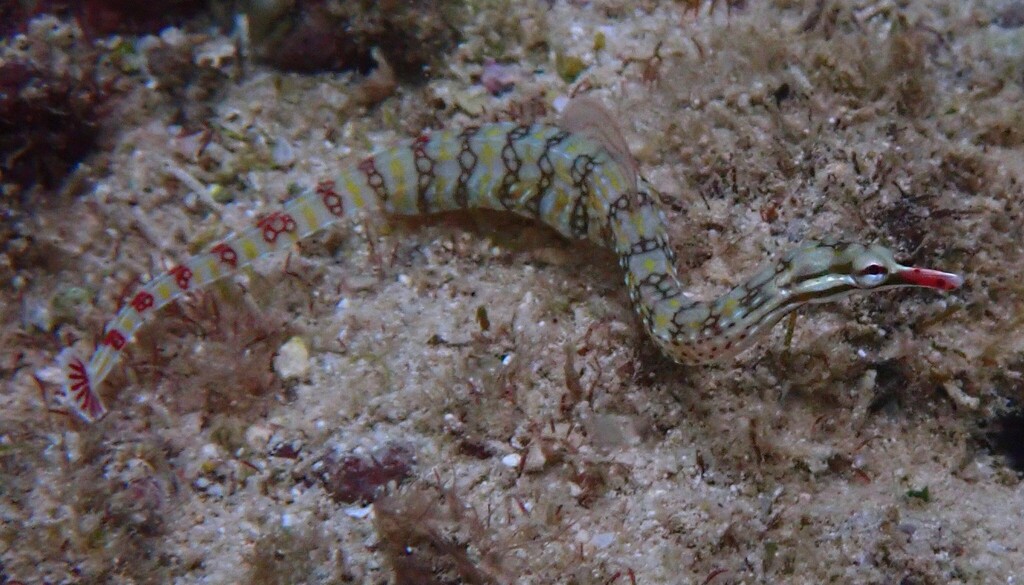 Banded Pipefish
Corythoichthys flavofasciatus
 Bloodspot Pipefish
Corythoichthys haematopterus
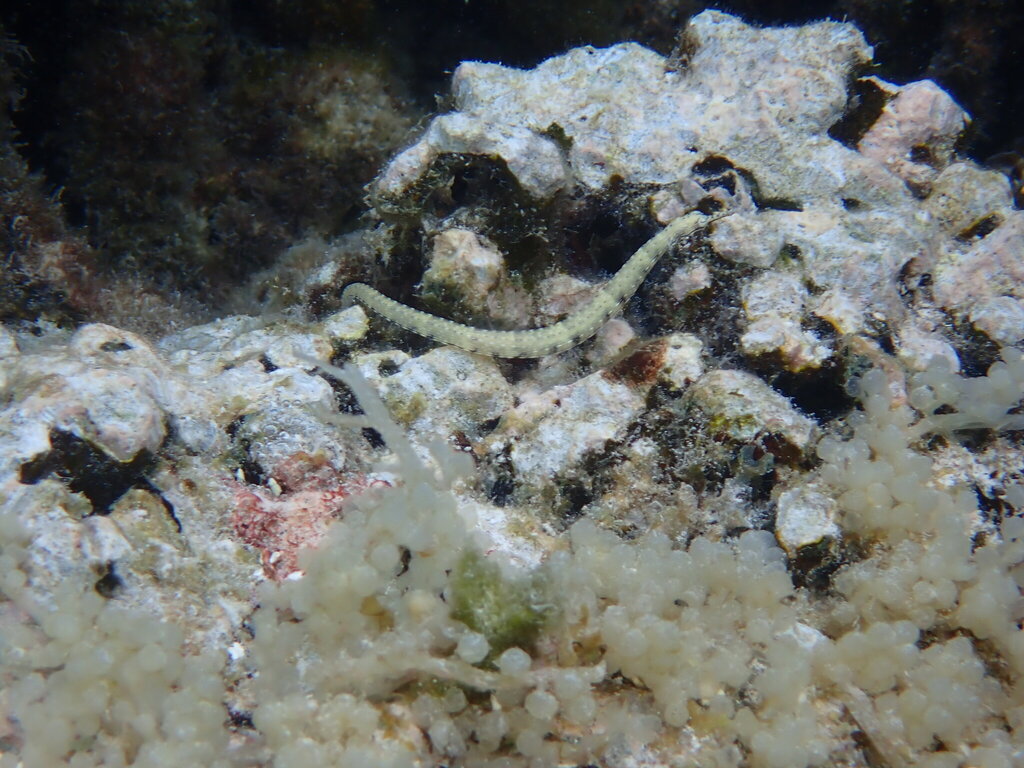 Banded pipefish
Corythoichthys intestinalis
Sources and credits
Names and taxonomy: WoRMS (CC BY 4.0) and the GBIF Backbone (CC BY 4.0). Photos: iNaturalist observers, each under the licence shown (CC0, CC BY or CC BY-SA).
- Depth, temperature, months and maps: records from OBIS and GBIF under CC0 or CC BY.
- Descriptions: Wikipedia, licensed CC BY-SA, each linked to its article.
- Conservation status as published by GBIF (IUCN Red List).
- 10 open-data records from 1977 to 1990.
- Species data updated November 4, 2026.
Log what you see on your next dive
The free DiveHive diver app keeps your logbook with every sighting and shows what lives at the site you dive next.