
DiscoverSpeciesSharks and rays
Numbray
Narke dipterygia
- Usual depth6–82 m
- Water temperature26–29 °C
- Best monthsAugust, September, and October
- How commonRare
About this species
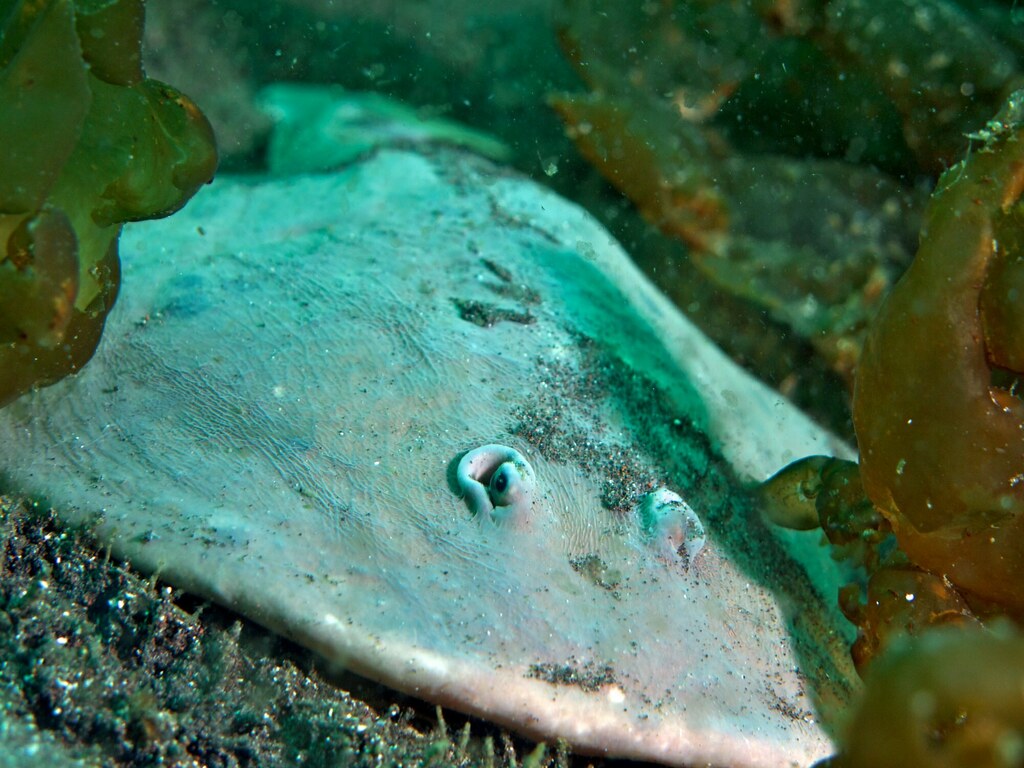
The numbray or spottail sleeper ray is a species of electric ray in the family Narkidae. It may be found in shallow muddy estuaries or offshore depths. It is a weak swimmer that lies on the bottom, commonly buried. It eats small marine invertebrates and fish. It pounces on its prey and wraps its body around its prey, killing or stunning it with electrical shocks. It has been observed that Numbrays are not as common as other types of rays in the area around the Indian Ocean. This can be attributed to the relatively large doubling time for a population, reaching up to 18 years.
Text from the Wikipedia article “Numbray”, licensed CC BY-SA 4.0. Read the article
Where and when
Where it has been recorded
Worldwide
Loading the map
Best months
Worldwide (open data)
- January: 2 records
- February: 1 records
- March: 1 records
- April: 1 records
- May: 0 records
- June: 0 records
- July: 2 records
- August: 4 records
- September: 3 records
- October: 4 records
- November: 0 records
- December: 0 records
Depth and water temperature
Depth
Mostly recorded at 6–82 m · Deepest record: 82.3 m
Water temperature
Recorded in surface water of 26–29 °C
Names and classification
- English
- Numbray, Spottail Sleeper Ray
Names in 2 more languages
- Japanese
- Hakutenshibirei, Shibire-ei, ハクテンシビレエイ
- Thai
- ปลากระเบนไฟฟ้าจุดขาว
Other scientific names: Bengalichthys impennis, Raja dipterygia
Similar species
 Japanese electric ray
Narke japonica
- Natal electric ray
Heteronarce garmani
Sources and credits
Names and taxonomy: WoRMS (CC BY 4.0) and the GBIF Backbone (CC BY 4.0). Photos: iNaturalist observers, each under the licence shown (CC0, CC BY or CC BY-SA).
- Depth, temperature, months and maps: records from OBIS and GBIF under CC0 or CC BY.
- Descriptions: Wikipedia, licensed CC BY-SA, each linked to its article.
- Conservation status as published by GBIF (IUCN Red List).
- 21 open-data records from 1801 to 2010.
- Species data updated November 4, 2026.
Log what you see on your next dive
The free DiveHive diver app keeps your logbook with every sighting and shows what lives at the site you dive next.