
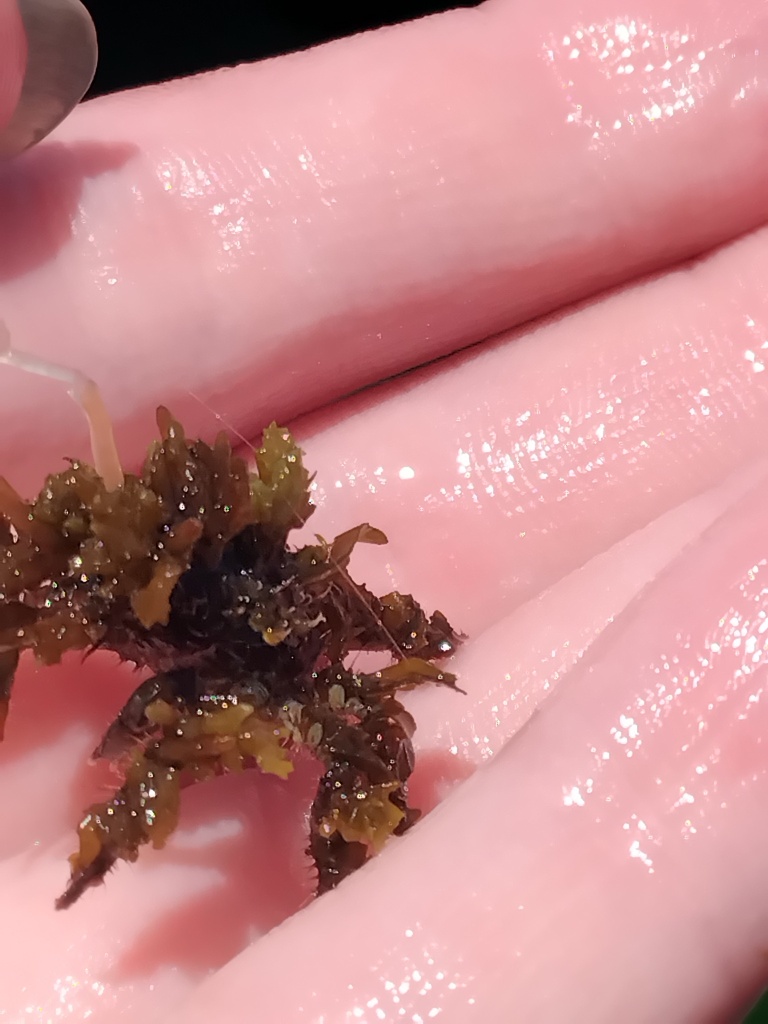
Little Seaweed Crab
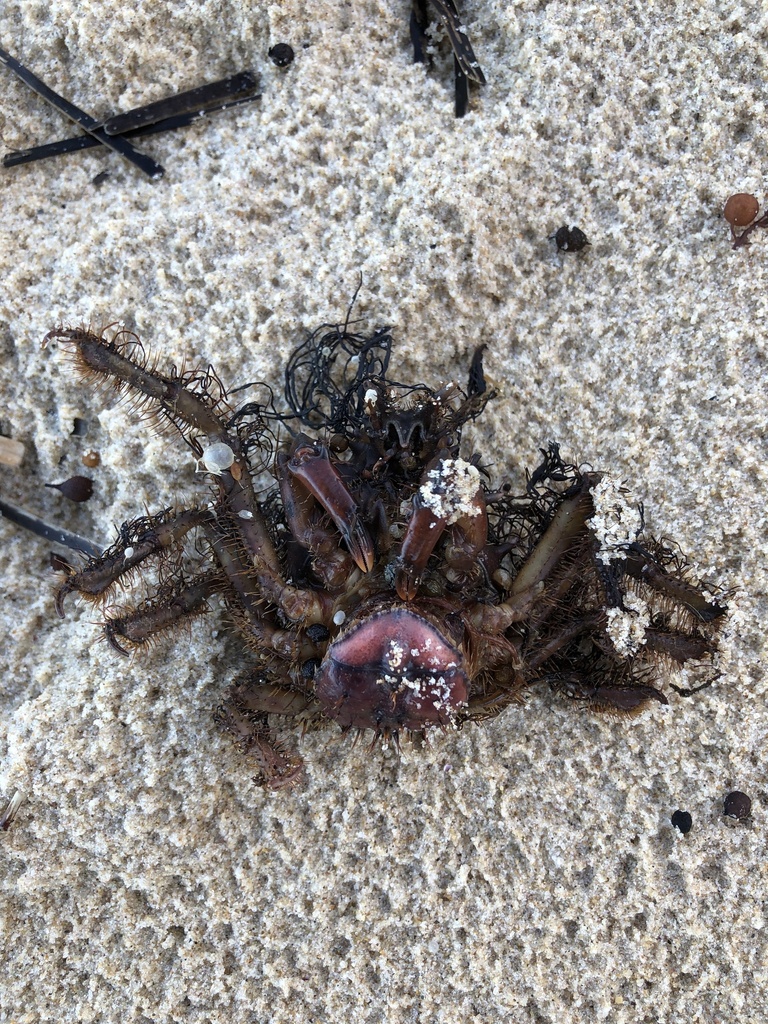
Naxia tumida
- Usual depth5–10 m
- Water temperature14–23 °C
- Best monthsJanuary, November, and December
- How commonRare
Photo credit: (c) Sofia Zvolanek, some rights reserved (CC BY) · CC BY · iNaturalist
About this species
Naxia tumida, the little seaweed crab, dresser crab, or decorator crab, is a small crab of the family Majidae that is common in rocky intertidal and subtidal areas on the temperate coasts of Australia, including parts of Victoria, New South Wales, Tasmania, South Australia and Western Australia. It is usually found covered in seaweed that acts as camouflage, attached to the hooks on its shell. It attaches the algae or seaweed with a secretion that becomes adhesive when hardened.
Text from the Wikipedia article “Naxia tumida”, licensed CC BY-SA 4.0. Read the article
Where and when
Where it has been recorded
Worldwide
Loading the map
Best months
Worldwide (open data)
- January: 18 records
- February: 15 records
- March: 10 records
- April: 11 records
- May: 5 records
- June: 3 records
- July: 8 records
- August: 1 records
- September: 12 records
- October: 7 records
- November: 25 records
- December: 21 records
Depth and water temperature
Depth
Mostly recorded at 5–10 m · Deepest record: 10 m
Water temperature
Recorded in surface water of 14–23 °C
Photos
(c) Josh Nitschke, some rights reserved (CC BY) · CC BY · iNaturalist 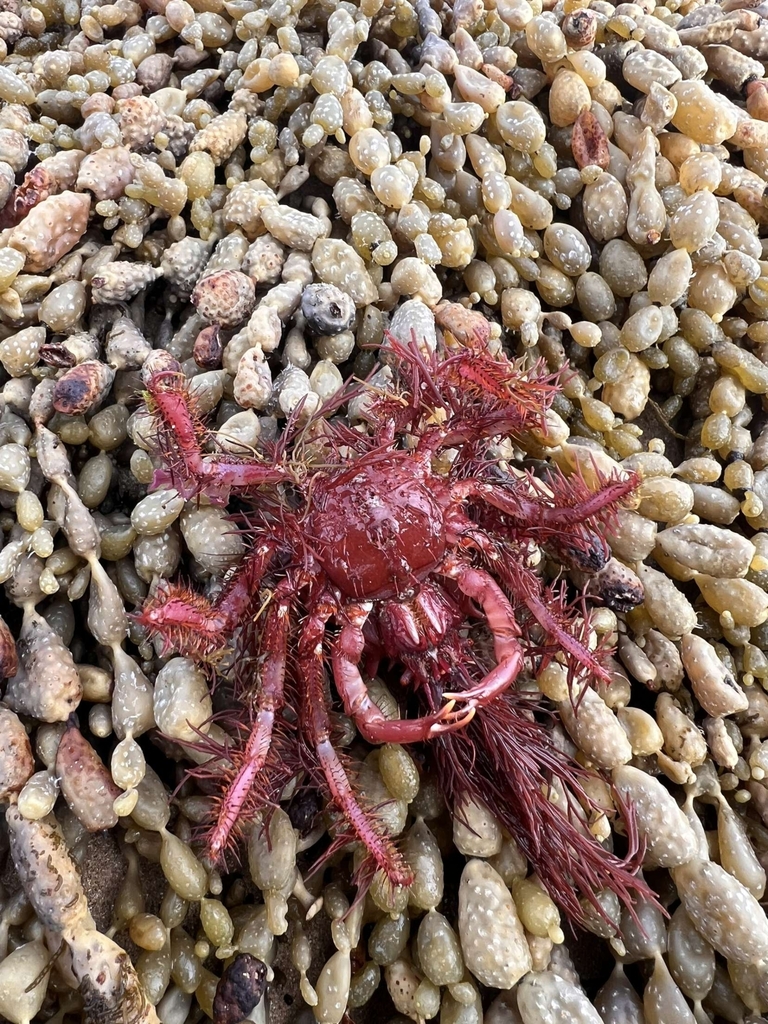
(c) Lukas Krug, some rights reserved (CC BY) · CC BY · iNaturalist
Names and classification
- English
- Little Seaweed Crab
Other scientific names: Halimus tumida, Halimus tumidus
Similar species
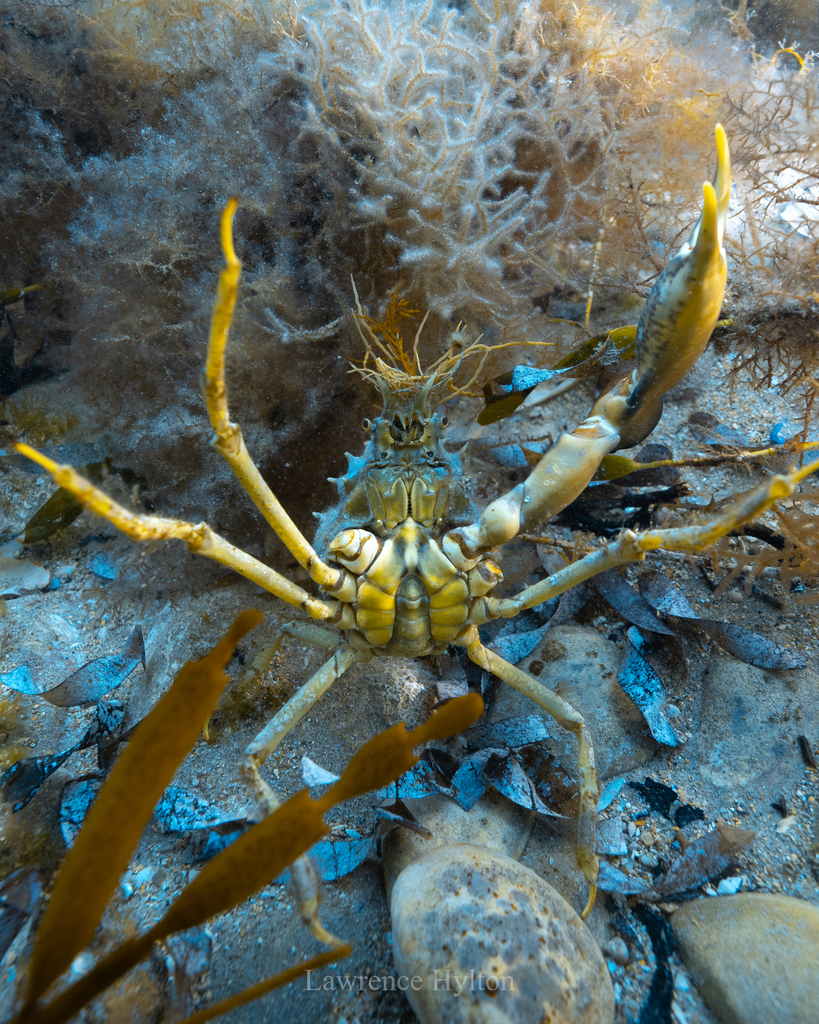 Golden Decorator Crab
Naxia aurita
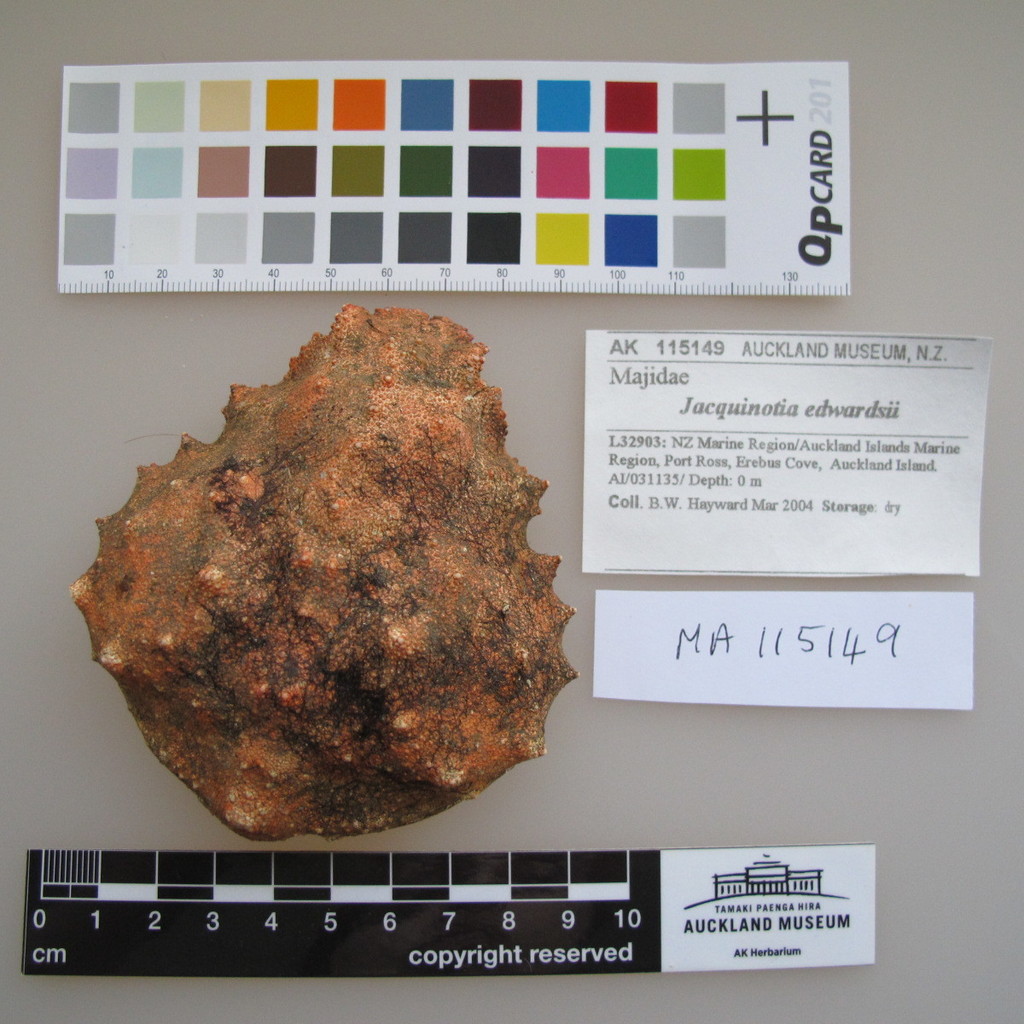 Southern spider crab
Jacquinotia edwardsii
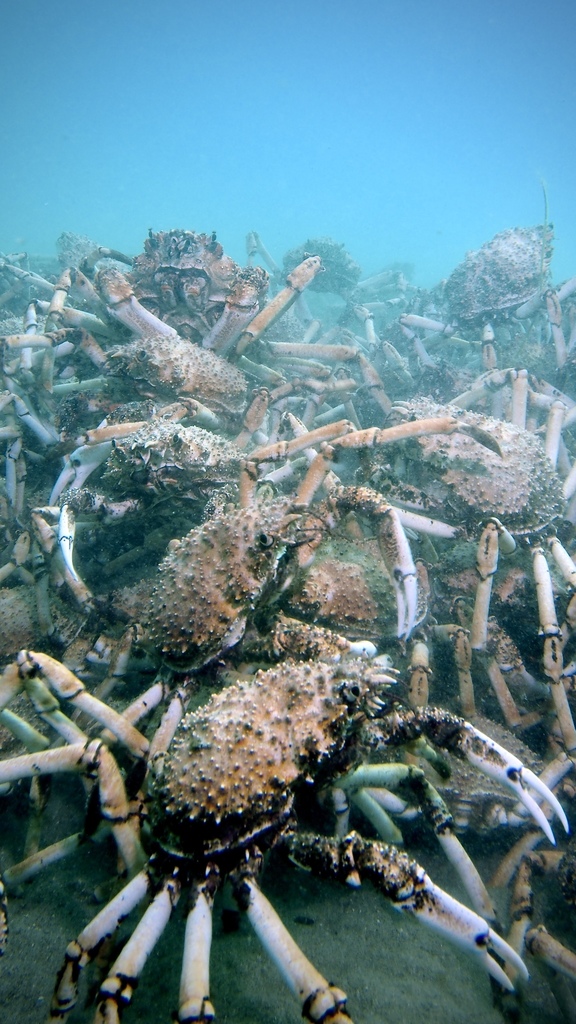 Great spider crab
Leptomithrax gaimardii
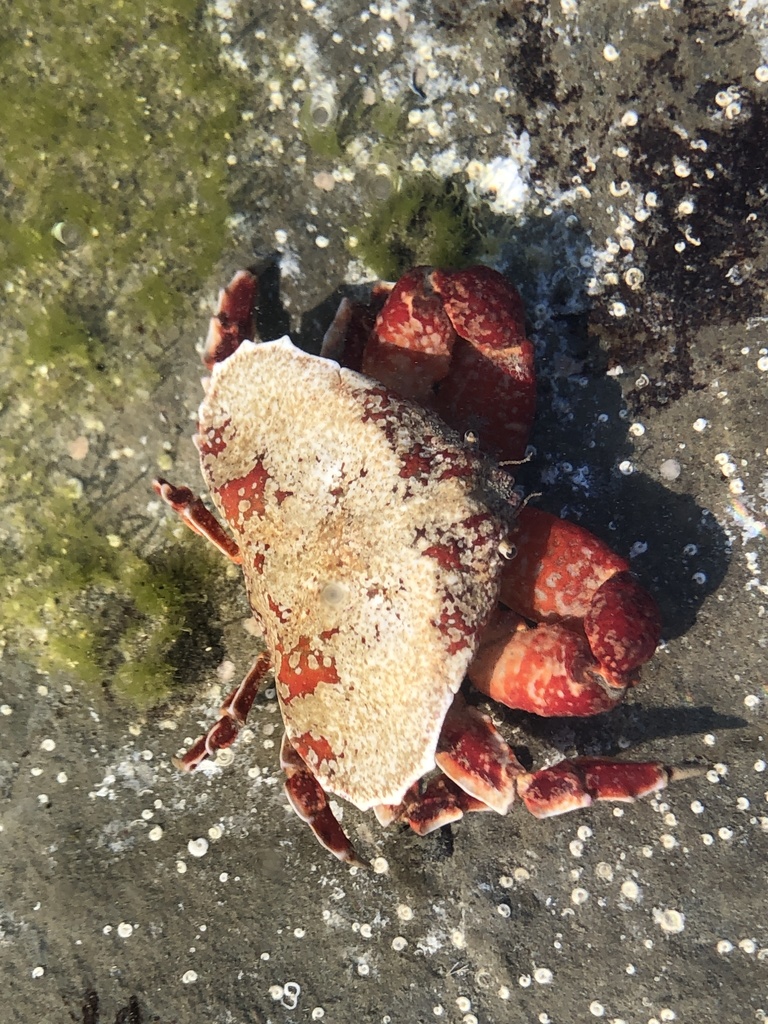 Triangle crab
Eurynolambrus australis
Sources and credits
Names and taxonomy: WoRMS (CC BY 4.0) and the GBIF Backbone (CC BY 4.0). Photos: iNaturalist observers, each under the licence shown (CC0, CC BY or CC BY-SA).
- Depth, temperature, months and maps: records from OBIS and GBIF under CC0 or CC BY.
- Descriptions: Wikipedia, licensed CC BY-SA, each linked to its article.
- Conservation status as published by GBIF (IUCN Red List).
- 153 open-data records from 1901 to 2008.
- Species data updated November 4, 2026.
Log what you see on your next dive
The free DiveHive diver app keeps your logbook with every sighting and shows what lives at the site you dive next.