
Girdled Wrasse
Notolabrus cinctus
- Usual depth13–126 m
- Water temperature9–18 °C
- Best monthsOctober
- How commonRare
About this species
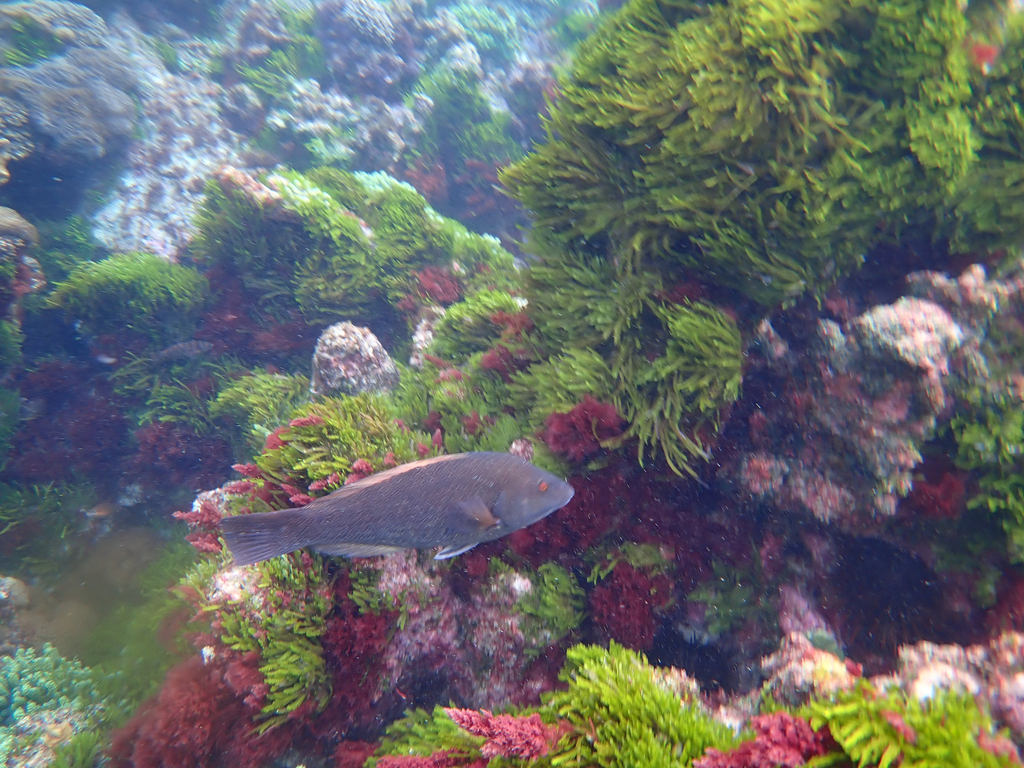
The girdled wrasse, Notolabrus cinctus, is a species of wrasse native to the waters around the South Island and southeastern North Island of New Zealand, including the Chatham Islands and Snares Islands, where it can be found at depths from 15 to 91 m. The males of this species can reach 29.9 cm (11.8 in) in standard length, while the females only reach 29.1 cm (11.5 in). There are two colour phases with older fish developing a large, dusky belt around the body. This is not associated with changing sex which happens about three years after the development of the belt. They feed on molluscs and small crustacea. They occur on rocky reefs, where they are common.
Text from the Wikipedia article “Girdled wrasse”, licensed CC BY-SA 4.0. Read the article
Where and when
Where it has been recorded
Worldwide
Loading the map
Best months
Worldwide (open data)
- January: 5 records
- February: 2 records
- March: 2 records
- April: 9 records
- May: 2 records
- June: 1 records
- July: 2 records
- August: 3 records
- September: 0 records
- October: 40 records
- November: 3 records
- December: 3 records
Depth and water temperature
Depth
Mostly recorded at 13–126 m · Deepest record: 225.5 m
Water temperature
Recorded in surface water of 9–18 °C
Names and classification
- English
- Girdled Wrasse
Names in 2 more languages
- German
- Gürtel-Lippfisch
- Simplified Chinese
- 橫帶擬隆頭魚
Other scientific names: Labrichthys cincta, Pseudolabrus cinctus
Similar species
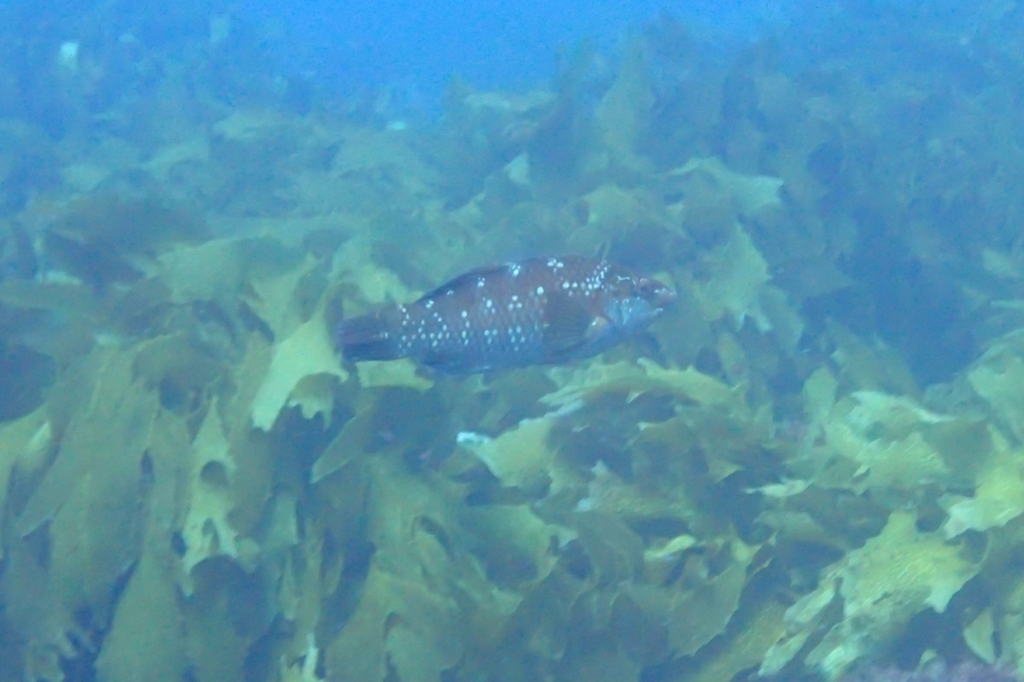 banded parrotfish
Notolabrus fucicola
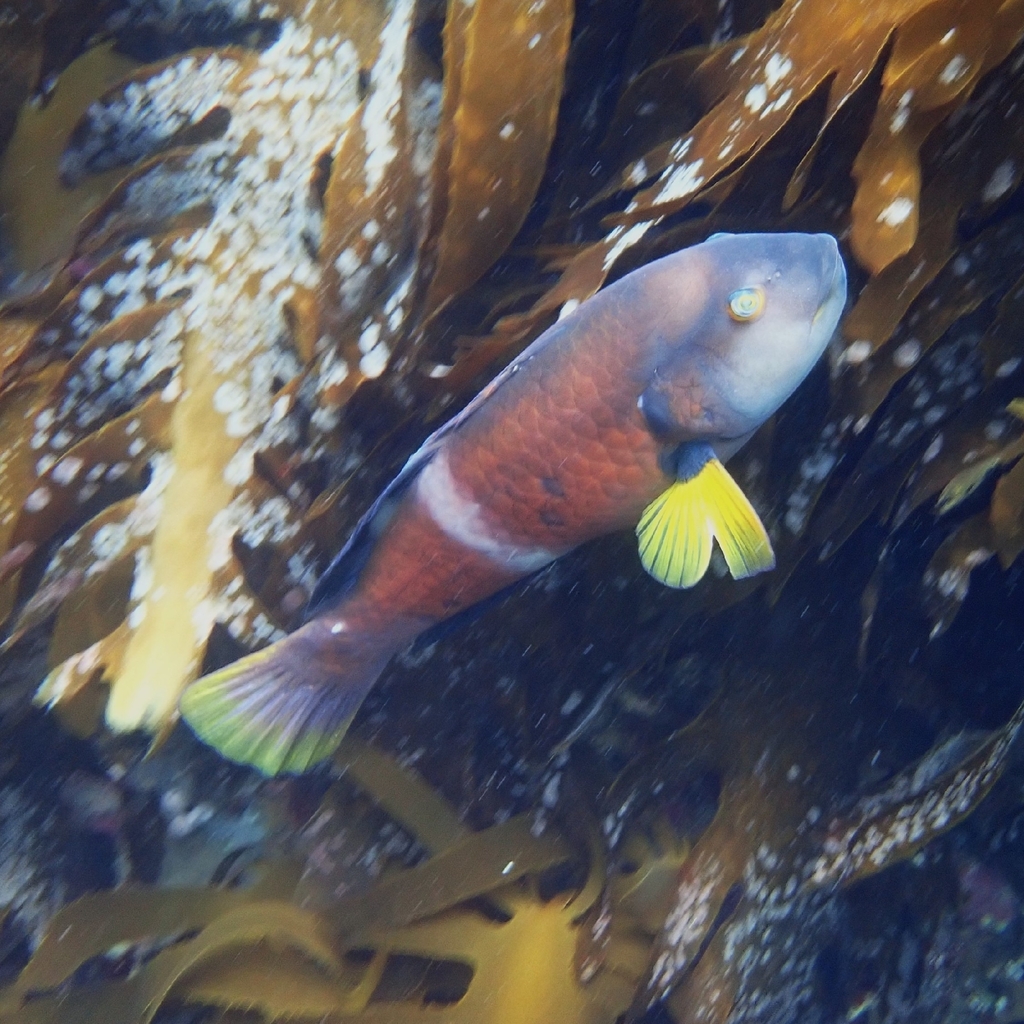 Bluehead
Notolabrus tetricus
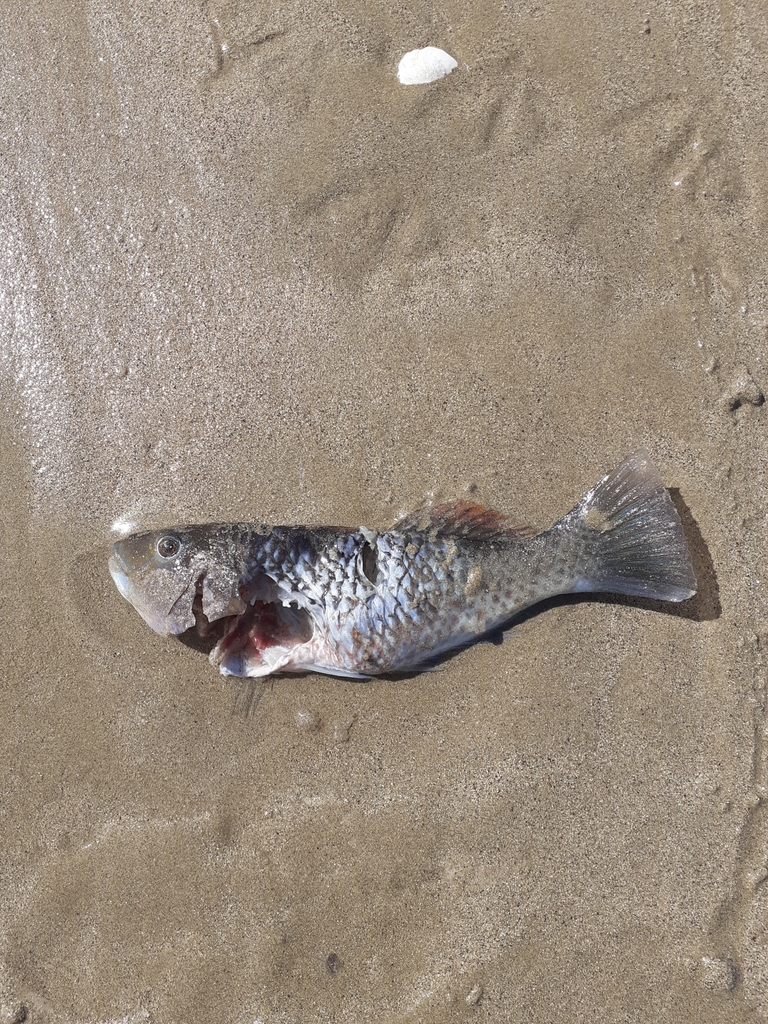 spotty
Notolabrus celidotus
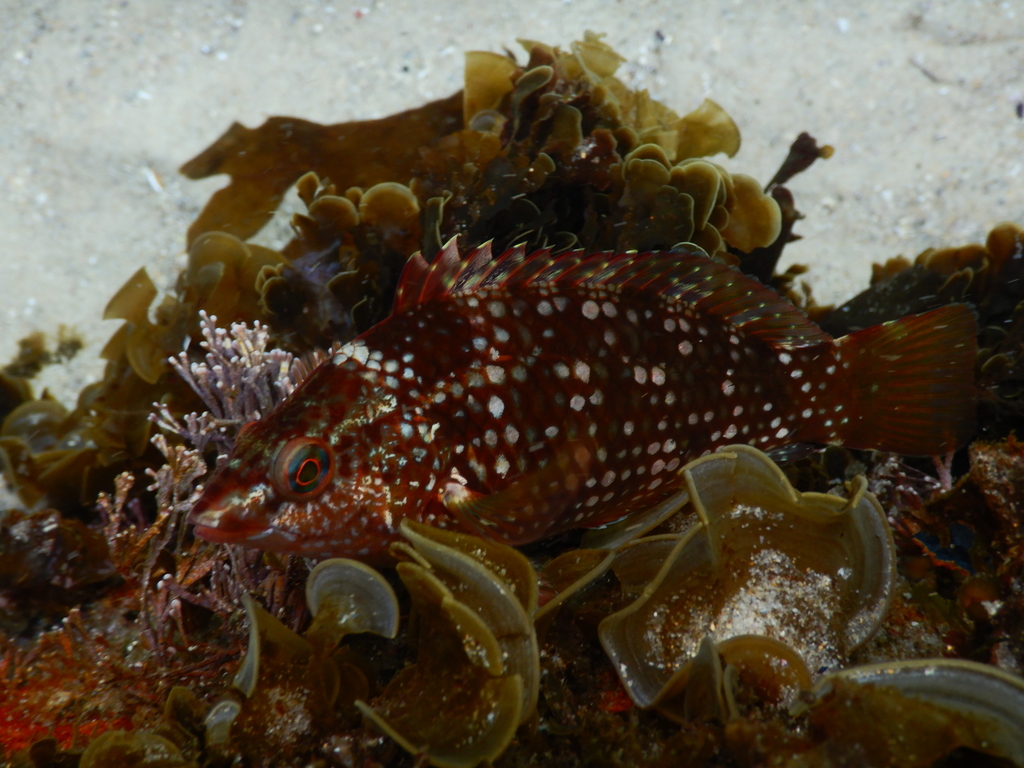 Crimson-banded Parrot-fish
Notolabrus gymnogenis
 Green Wrasse
Notolabrus inscriptus
 Brown-spotted Parrotfish
Notolabrus parilus
Sources and credits
Names and taxonomy: WoRMS (CC BY 4.0) and the GBIF Backbone (CC BY 4.0). Photos: iNaturalist observers, each under the licence shown (CC0, CC BY or CC BY-SA).
- Depth, temperature, months and maps: records from OBIS and GBIF under CC0 or CC BY.
- Descriptions: Wikipedia, licensed CC BY-SA, each linked to its article.
- Conservation status as published by GBIF (IUCN Red List).
- 246 open-data records from 1918 to 2018.
- Species data updated November 5, 2026.
Log what you see on your next dive
The free DiveHive diver app keeps your logbook with every sighting and shows what lives at the site you dive next.