
Dwarf codling
Notophycis marginata
- Usual depth263–541 m
- Water temperature4–21 °C
- Best monthsFebruary
- How commonCommon
About this species
The dwarf codling (Notophycis marginata), is a species of morid cod found on the continental slopes in the southeast Pacific and the southwest Atlantic, where it is found down to 1,200 m (3,900 ft). This species grows to 24 cm (9.4 in) in total length.
Text from the Wikipedia article “Dwarf codling”, licensed CC BY-SA 4.0. Read the article
Where and when
Where it has been recorded
Worldwide
Loading the map
Best months
Worldwide (open data)
- January: 105 records
- February: 3,784 records
- March: 6 records
- April: 25 records
- May: 184 records
- June: 58 records
- July: 182 records
- August: 7 records
- September: 247 records
- October: 1,085 records
- November: 1,141 records
- December: 11 records
Depth and water temperature
Depth
Mostly recorded at 263–541 m · Deepest record: 3,821.5 m
Water temperature
Recorded in surface water of 4–21 °C
Names and classification
- English
- Dwarf codling, dwarf codling, Fork Beard, Forkbeard Cod, Tasmanian Cod
Names in 1 more languages
- French
- Moro à nageoires noires
Other scientific names: Austrophycis marginata, Austrophycis megalops, Lotella marginata, Physiculus marginatus
Similar species
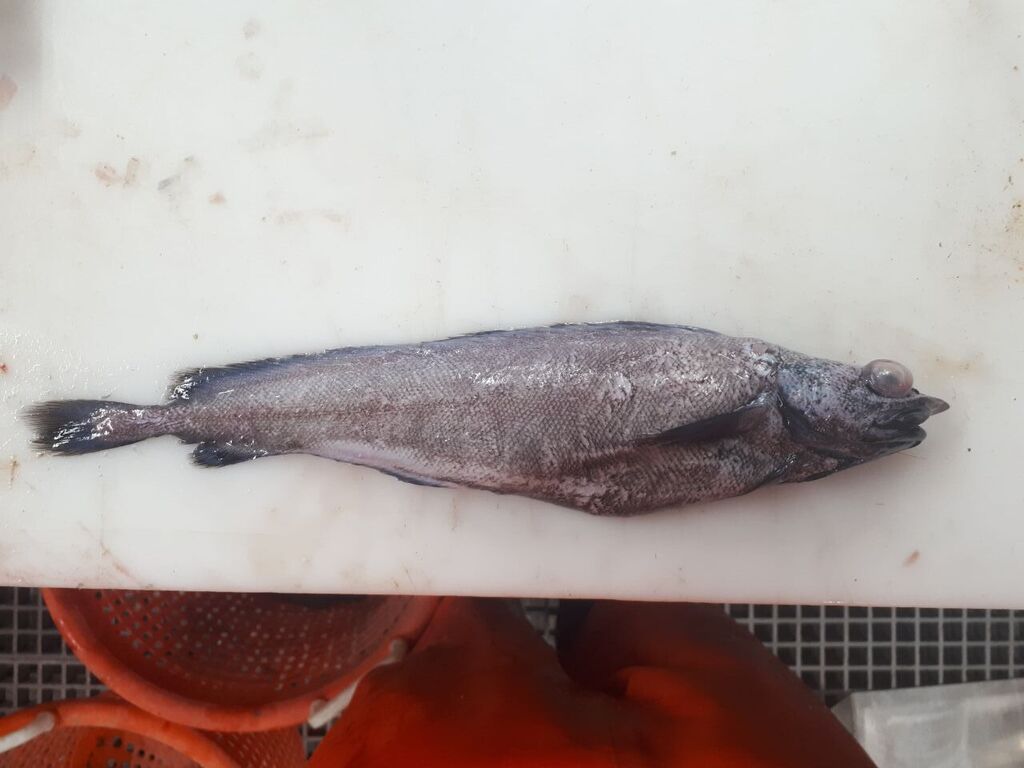 Blackcod
Antimora rostrata
- Dainty mora
Halargyreus johnsonii
- Common mora
Mora moro
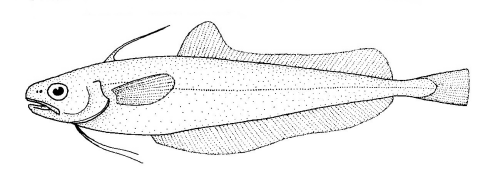 ahuru
Auchenoceros punctatus
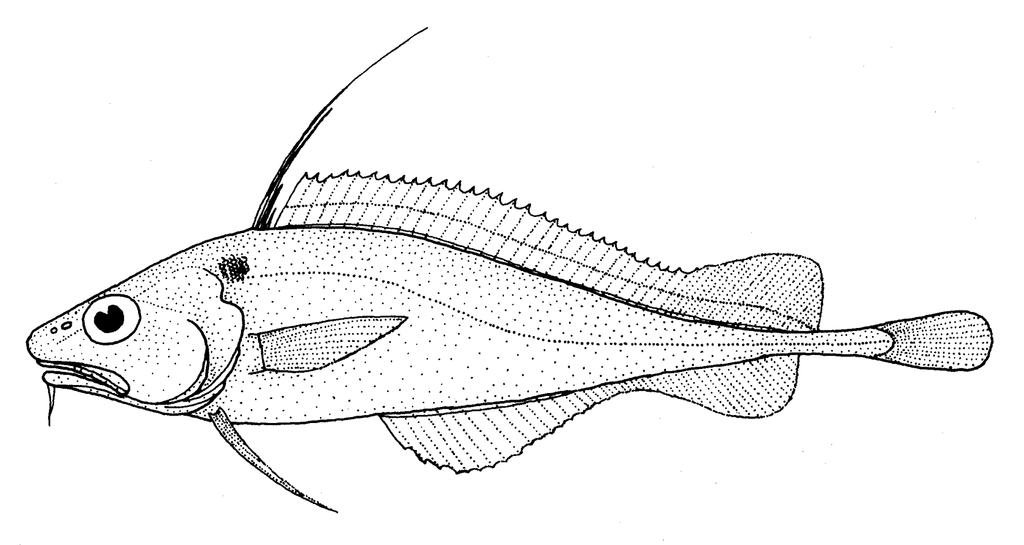 Long-finned Cod
Lepidion microcephalus
- Finescale mora
Antimora microlepis
Sources and credits
Names and taxonomy: WoRMS (CC BY 4.0) and the GBIF Backbone (CC BY 4.0). Photos: iNaturalist observers, each under the licence shown (CC0, CC BY or CC BY-SA).
- Depth, temperature, months and maps: records from OBIS and GBIF under CC0 or CC BY.
- Descriptions: Wikipedia, licensed CC BY-SA, each linked to its article.
- Conservation status as published by GBIF (IUCN Red List).
- 7,445 open-data records from 1927 to 2023.
- Species data updated November 5, 2026.
Log what you see on your next dive
The free DiveHive diver app keeps your logbook with every sighting and shows what lives at the site you dive next.