
DiscoverSpeciesSharks and rays
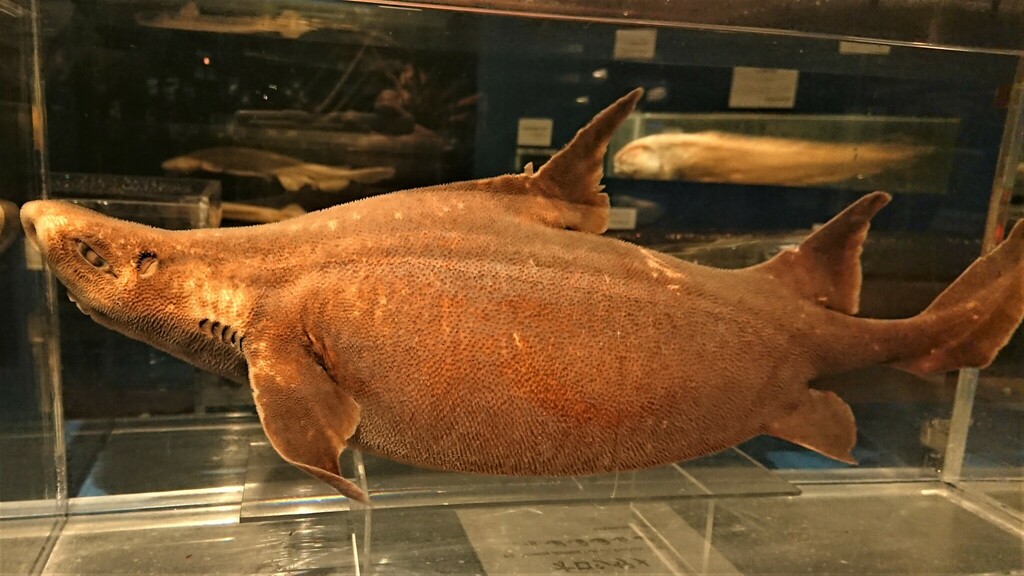
Japanese Roughshark
Oxynotus japonicus
- Usual depth247.5 m
- Water temperature20–21 °C
- Best monthsJuly
- How commonRare
Photo credit: (c) 出羽雀台, einige Rechte vorbehalten (CC BY-SA) · CC BY-SA · iNaturalist
About this species
The Japanese roughshark is a rare species of shark in the family Oxynotidae, known only from a handful of specimens recovered from Suruga Bay and the Enshunada Sea off Japan. It is a benthic species that occurs at a depth of 150–350 m (490–1,150 ft). This shark is caught as bycatch by bottom trawlers throughout its entire limited range, and may be threatened given the declines in other bottom deep sea species in Suruga Bay.
Text from the Wikipedia article “Japanese roughshark”, licensed CC BY-SA 4.0. Read the article
Where and when
Where it has been recorded
Worldwide
Loading the map
Best months
Worldwide (open data)
- January: 0 records
- February: 1 records
- March: 0 records
- April: 0 records
- May: 0 records
- June: 0 records
- July: 2 records
- August: 0 records
- September: 0 records
- October: 0 records
- November: 0 records
- December: 0 records
Depth and water temperature
Depth
Mostly recorded at 247.5 m · Deepest record: 247.5 m
Water temperature
Recorded in surface water of 20–21 °C
Photos
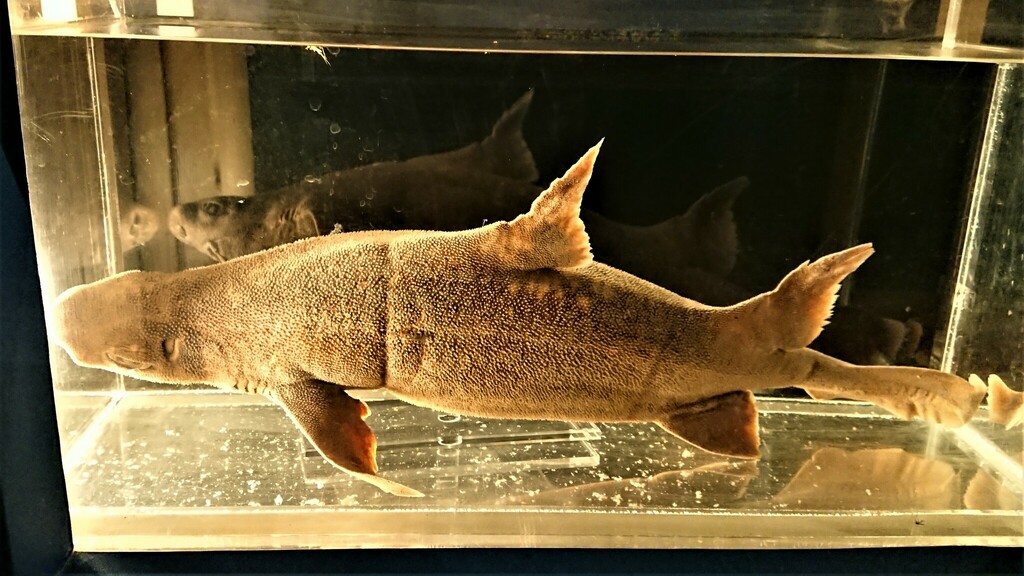
(c) 出羽雀台, einige Rechte vorbehalten (CC BY-SA) · CC BY-SA · iNaturalist
Names and classification
- English
- Japanese Roughshark
Names in 3 more languages
- German
- Japanische Meersau
- Spanish
- Cerdo marino japonés
- Japanese
- Oroshi-zame, Oroshizame, オロシザメ
Similar species
- prickley dogfish
Oxynotus bruniensis
Sources and credits
Names and taxonomy: WoRMS (CC BY 4.0) and the GBIF Backbone (CC BY 4.0). Photos: iNaturalist observers, each under the licence shown (CC0, CC BY or CC BY-SA).
- Depth, temperature, months and maps: records from OBIS and GBIF under CC0 or CC BY.
- Descriptions: Wikipedia, licensed CC BY-SA, each linked to its article.
- Conservation status as published by GBIF (IUCN Red List).
- 3 open-data records from 1982 to 2002.
- Species data updated November 5, 2026.
Log what you see on your next dive
The free DiveHive diver app keeps your logbook with every sighting and shows what lives at the site you dive next.