
DiscoverSpeciesOther invertebrates
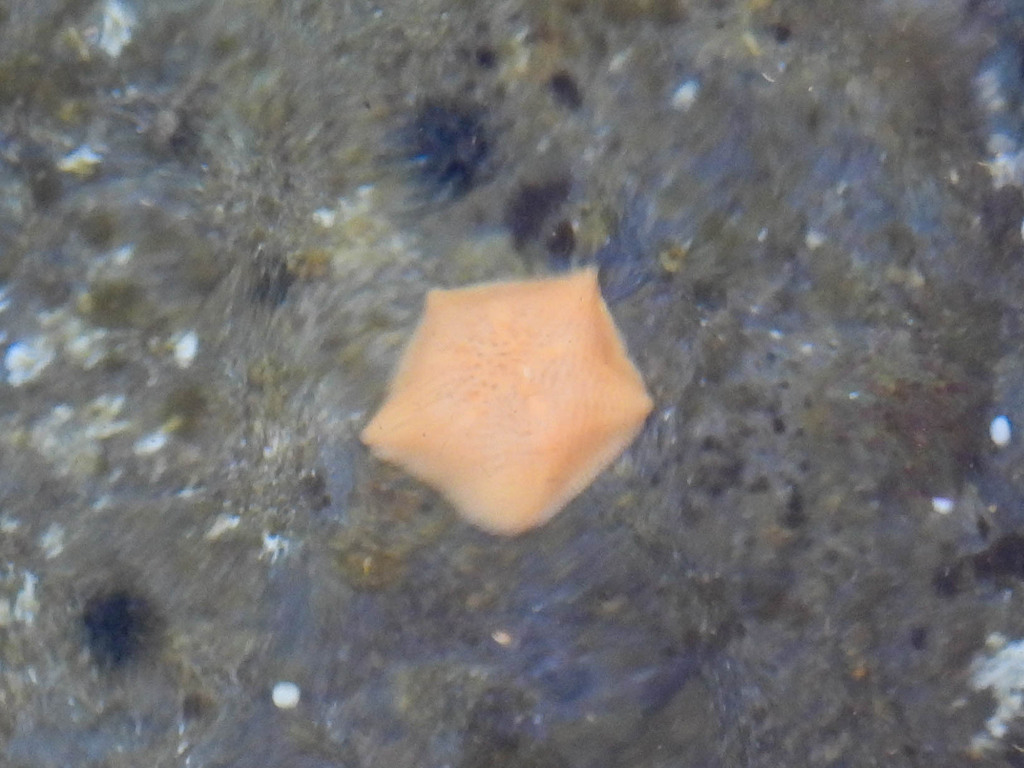
Tasmanian Livebearing Seastar
Parvulastra vivipara
- Usual depth1 m
- Water temperature14–14 °C
- Best monthsFebruary, March, and May
- How commonRare
Photo credit: no rights reserved · CC0 1.0 · iNaturalist
About this species
Parvulastra vivipara, the Tasmanian live-bearing seastar, is a tiny, uniformly orange-yellow seastar, ranging between 15 mm and 30 mm in diameter. The species is typically a rounded, pentagonal shape, but some individuals can be found with three, four or six arms. It is endemic to littoral waters in southeast Tasmania.
Text from the Wikipedia article “Parvulastra vivipara”, licensed CC BY-SA 4.0. Read the article
Where and when
Where it has been recorded
Worldwide
Loading the map
Best months
Worldwide (open data)
- January: 6 records
- February: 7 records
- March: 7 records
- April: 4 records
- May: 7 records
- June: 2 records
- July: 3 records
- August: 0 records
- September: 5 records
- October: 2 records
- November: 2 records
- December: 7 records
Depth and water temperature
Depth
Mostly recorded at 1 m · Deepest record: 1 m
Water temperature
Recorded in surface water of 14–14 °C
Names and classification
- English
- Tasmanian Livebearing Seastar, Tasmanian Live-Bearing Seastar
Other scientific names: Patiriella vivipara
Similar species
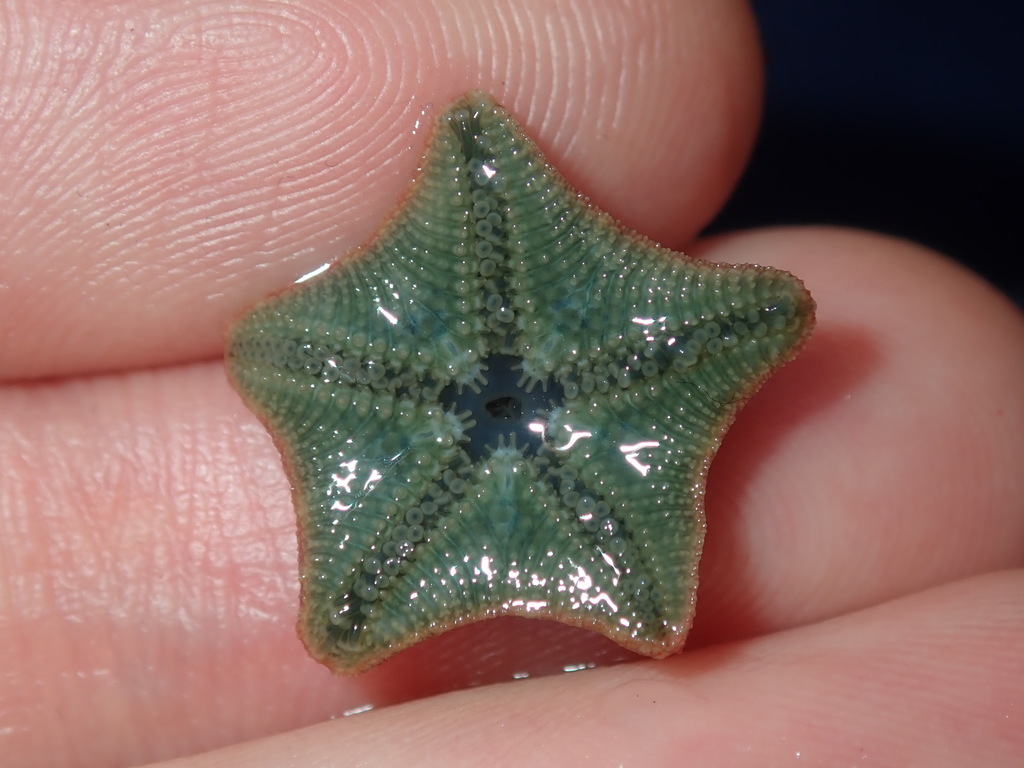 Dwarf Cushion Star
Parvulastra exigua
- South Australian Live-bearing Sea Star
Parvulastra parvivipara
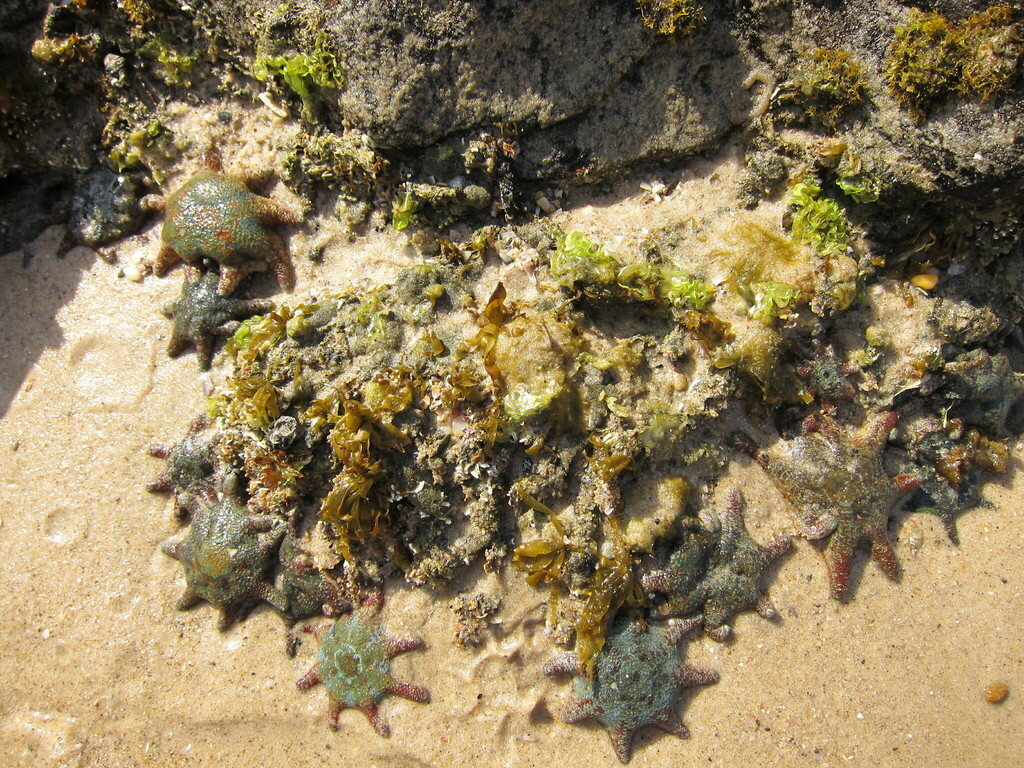 Carpet Sea Star
Meridiastra calcar
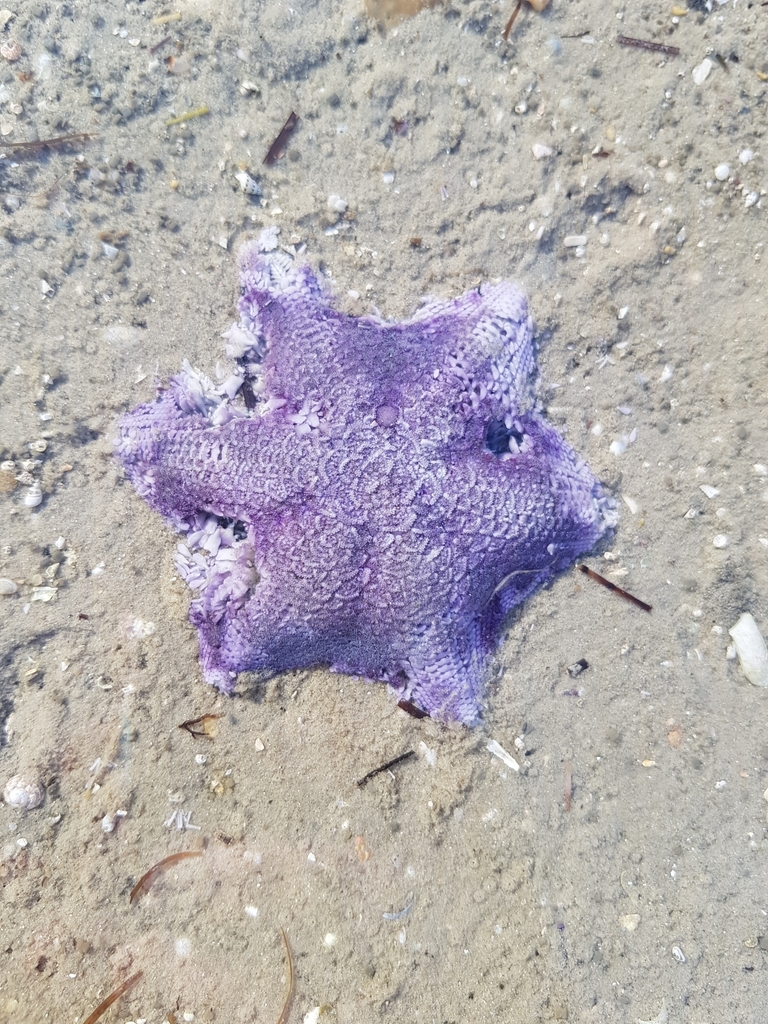 Gunn's six-armed star
Meridiastra gunnii
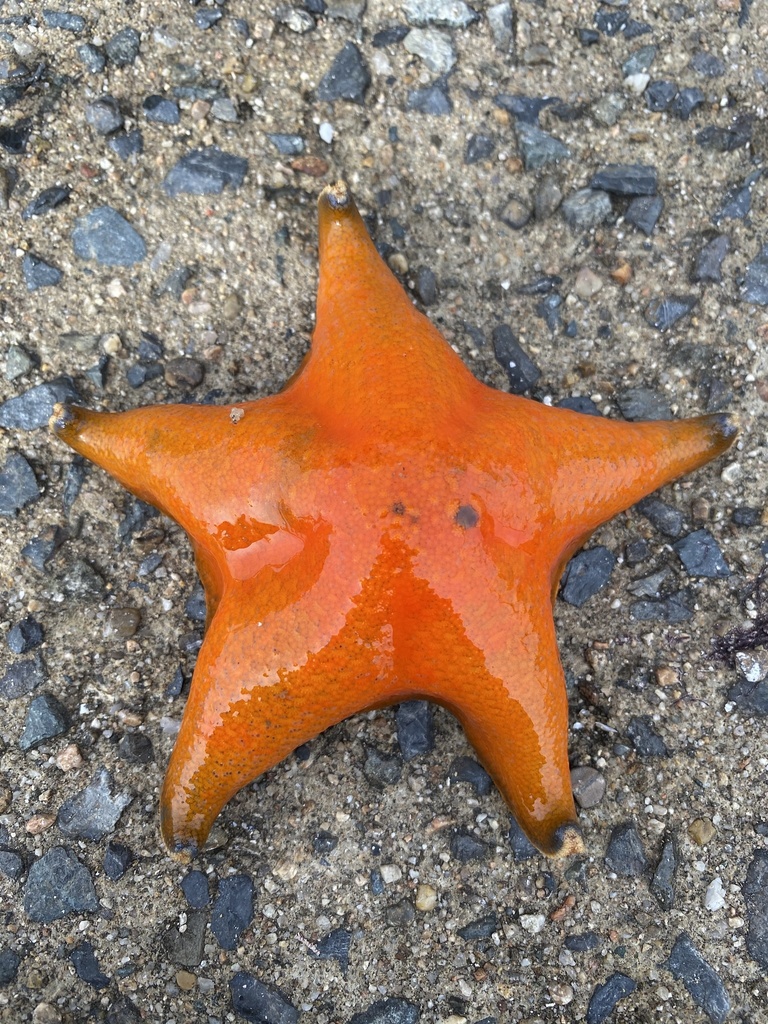 Blue bat star
Patiria pectinifera
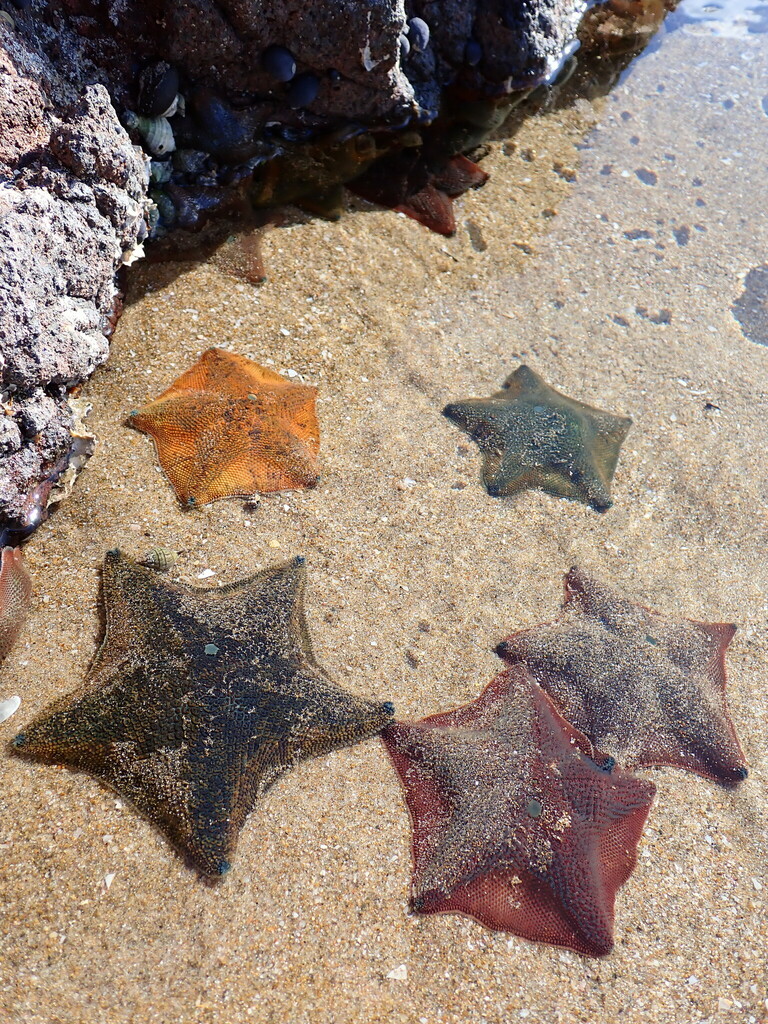 Common cushion star
Patiriella regularis
Sources and credits
Names and taxonomy: WoRMS (CC BY 4.0) and the GBIF Backbone (CC BY 4.0). Photos: iNaturalist observers, each under the licence shown (CC0, CC BY or CC BY-SA).
- Depth, temperature, months and maps: records from OBIS and GBIF under CC0 or CC BY.
- Descriptions: Wikipedia, licensed CC BY-SA, each linked to its article.
- Conservation status as published by GBIF (IUCN Red List).
- 89 open-data records from 1967 to 2004.
- Species data updated November 5, 2026.
Log what you see on your next dive
The free DiveHive diver app keeps your logbook with every sighting and shows what lives at the site you dive next.