
Blue-fin Wrasse
Thalassoma lutescens
- Usual depth5–22 m
- Water temperature21–29 °C
- Best monthsApril
- How commonCommon
About this species
The yellow-brown wrasse or sunset wrasse is a species of wrasse native to the Indian and Pacific Oceans, where they are found from Sri Lanka to the Hawaiian Islands and from southern Japan to Australia. An inhabitant of coral reefs, it occurs in schools at depths from 1 to 30 m. It can reach 30 cm (12 in) in total length. This species is of minor importance to local commercial fisheries and can also be found in the aquarium trade.
Text from the Wikipedia article “Yellow-brown wrasse”, licensed CC BY-SA 4.0. Read the article
Where and when
Where it has been recorded
Worldwide
Loading the map
Best months
Worldwide (open data)
- January: 112 records
- February: 478 records
- March: 1,191 records
- April: 2,268 records
- May: 1,359 records
- June: 659 records
- July: 316 records
- August: 429 records
- September: 798 records
- October: 656 records
- November: 98 records
- December: 68 records
Depth and water temperature
Depth
Mostly recorded at 5–22 m · Deepest record: 65.5 m
Water temperature
Recorded in surface water of 21–29 °C
Names and classification
- English
- Blue-fin Wrasse, green moon wrasse, Lime green wrasse, Parrotfish, Sunset Wrasse, Whistling Daughter, Yellow-brown Wrasse, Yellow-green Wrasse, Yellow Moon Wrasse, Yellow Wrasse
Names in 6 more languages
- German
- Gelbbrauner Lippfisch, Kanarienjunker
- Spanish
- Señorita del Atardecer
- Filipino
- Bankilan, Bungat, Isdang bato, Mameng
- French
- Girelle-paon jaune, Labre jaune
- Japanese
- Yamabukibera, ベラ亜目, ヤマブキベラ
- Simplified Chinese
- 四齒, 礫仔, 紫衣, 胸斑錦魚, 貓仔魚, 青汕冷, 青花龍, 黃衣, 黃衣葉鯛, 黃衣錦魚
Other scientific names: Julis lutescens
Similar species
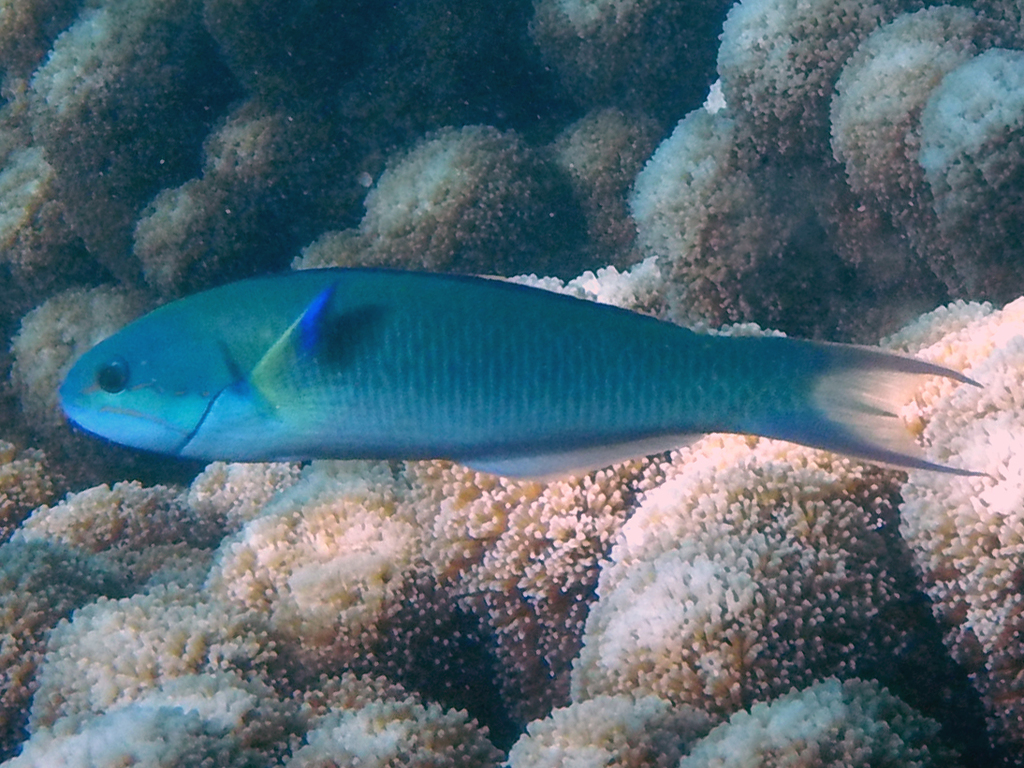 Bluntheaded wrasse
Thalassoma amblycephalum
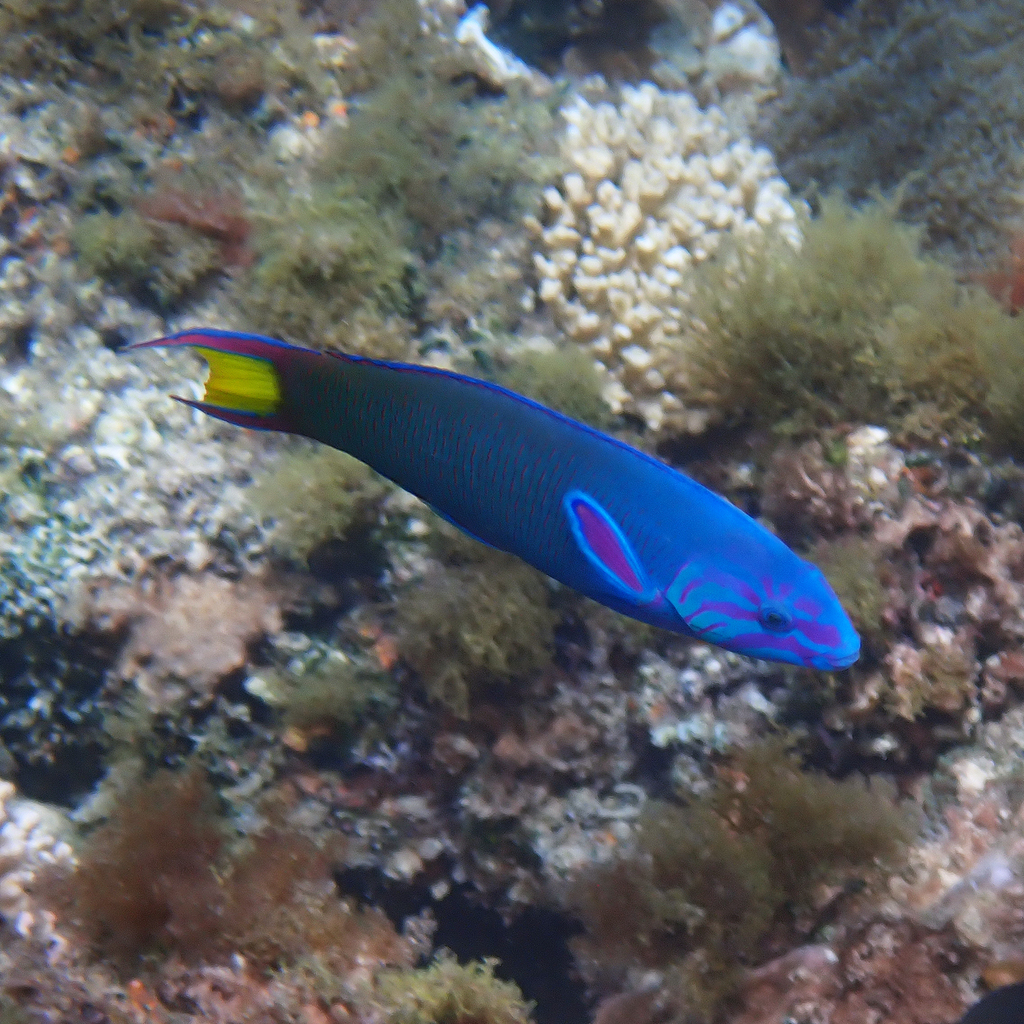 Moon wrasse
Thalassoma lunare
- Parrotfish
Thalassoma hardwicke
- blackspot wrasse
Thalassoma quinquevittatum
- Jansen's Wrasse
Thalassoma jansenii
- Surge wrasse
Thalassoma purpureum
Sources and credits
Names and taxonomy: WoRMS (CC BY 4.0) and the GBIF Backbone (CC BY 4.0). Photos: iNaturalist observers, each under the licence shown (CC0, CC BY or CC BY-SA).
- Depth, temperature, months and maps: records from OBIS and GBIF under CC0 or CC BY.
- Descriptions: Wikipedia, licensed CC BY-SA, each linked to its article.
- Conservation status as published by GBIF (IUCN Red List).
- 13,046 open-data records from 1906 to 2023.
Log what you see on your next dive
The free DiveHive diver app keeps your logbook with every sighting and shows what lives at the site you dive next.