
blackspot wrasse
Thalassoma quinquevittatum
- Usual depth4–15 m
- Water temperature26–30 °C
- Best monthsMarch and April
- How commonCommon
About this species
The fivestripe wrasse, also known as the red-ribbon wrasse, is a species of marine ray-finned fish, a wrasse, from the family Labridae. It is found in the Indo-Pacific region.
Text from the Wikipedia article “Fivestripe wrasse”, licensed CC BY-SA 4.0. Read the article
Where and when
Where it has been recorded
Worldwide
Loading the map
Best months
Worldwide (open data)
- January: 213 records
- February: 1,986 records
- March: 4,041 records
- April: 5,237 records
- May: 2,433 records
- June: 1,238 records
- July: 690 records
- August: 642 records
- September: 689 records
- October: 173 records
- November: 32 records
- December: 4 records
Depth and water temperature
Depth
Mostly recorded at 4–15 m · Deepest record: 41.3 m
Water temperature
Recorded in surface water of 26–30 °C
Names and classification
- English
- blackspot wrasse, Five Striped Surge Wrasse, Fivestripe wrasse, Red-banded Wrasse, Red-ribbon Wrasse
Names in 2 more languages
- French
- Labre à cinq bandes
- Japanese
- Hakobera, ハコベラ
Other scientific names: Scarus quinquevittatus, Thalassoma quinquevittata, Thalassoma quinquevittatus, Thalassoma quiquivittatum, Thalassoma qunquevittatum
Similar species
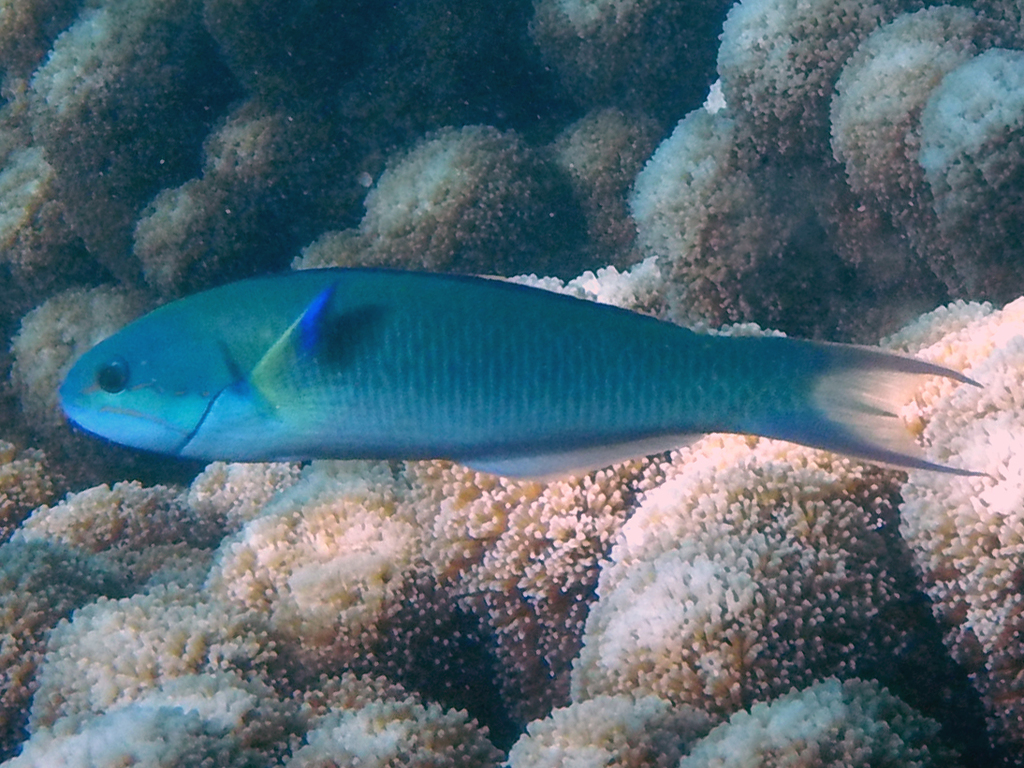 Bluntheaded wrasse
Thalassoma amblycephalum
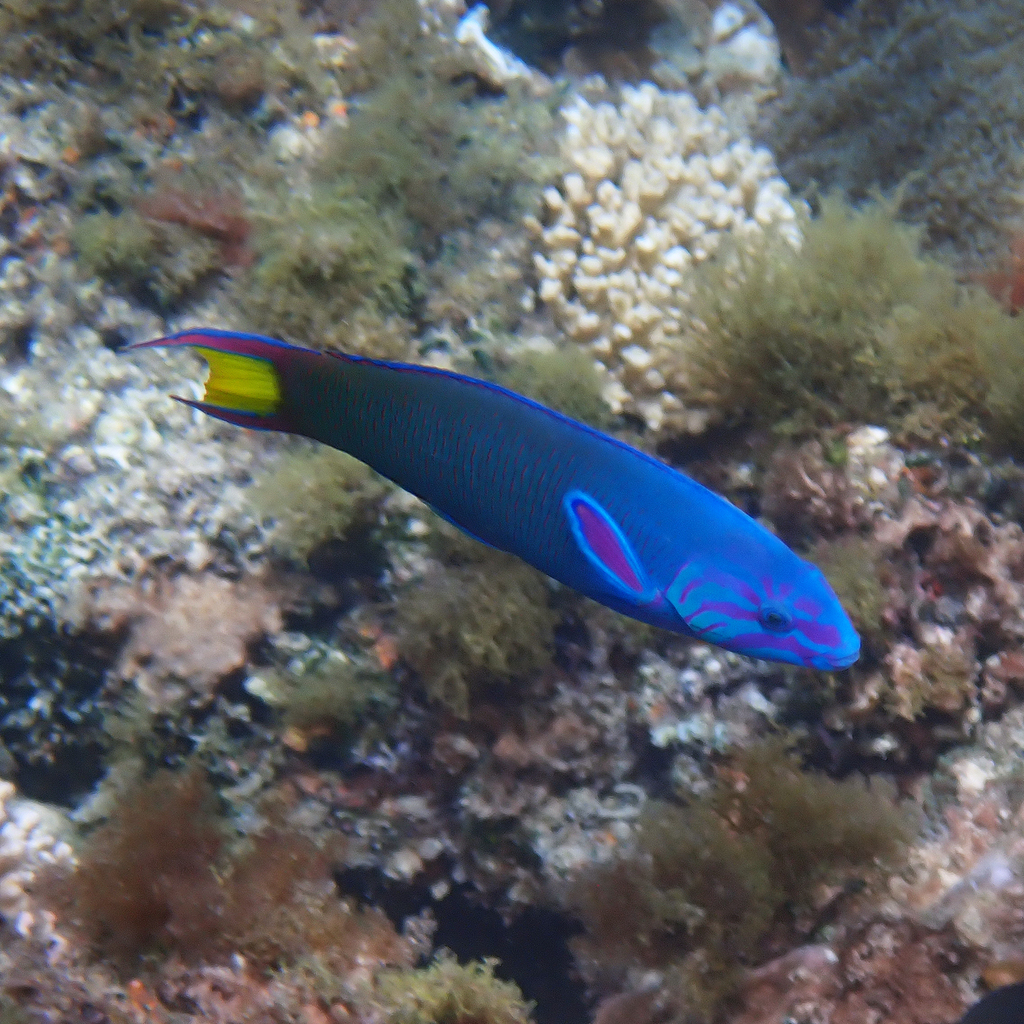 Moon wrasse
Thalassoma lunare
- Parrotfish
Thalassoma hardwicke
- Blue-fin Wrasse
Thalassoma lutescens
- Jansen's Wrasse
Thalassoma jansenii
- Surge wrasse
Thalassoma purpureum
Sources and credits
Names and taxonomy: WoRMS (CC BY 4.0) and the GBIF Backbone (CC BY 4.0). Photos: iNaturalist observers, each under the licence shown (CC0, CC BY or CC BY-SA).
- Depth, temperature, months and maps: records from OBIS and GBIF under CC0 or CC BY.
- Descriptions: Wikipedia, licensed CC BY-SA, each linked to its article.
- Conservation status as published by GBIF (IUCN Red List).
- 18,414 open-data records from 1939 to 2023.
Log what you see on your next dive
The free DiveHive diver app keeps your logbook with every sighting and shows what lives at the site you dive next.