
Surge wrasse
Thalassoma purpureum
- Usual depth1–13 m
- Water temperature21–30 °C
- Best monthsAugust, September, and October
- How commonOccasional
About this species
The surge wrasse, also known as the green-blocked wrasse, purple wrasse or red and green wrasse, is a species of wrasse native to the southeast Atlantic Ocean through the Indian and Pacific Oceans, where it inhabits reefs and rocky coastlines in areas of heavy wave action at depths from the surface to 10 m (33 ft). This species is of minor importance to local commercial fisheries, is popular as a game fish, and can be found in the aquarium trade.
Text from the Wikipedia article “Surge wrasse”, licensed CC BY-SA 4.0. Read the article
Where and when
Where it has been recorded
Worldwide
Loading the map
Best months
Worldwide (open data)
- January: 10 records
- February: 55 records
- March: 82 records
- April: 142 records
- May: 143 records
- June: 75 records
- July: 148 records
- August: 273 records
- September: 375 records
- October: 310 records
- November: 36 records
- December: 44 records
Depth and water temperature
Depth
Mostly recorded at 1–13 m · Deepest record: 100 m
Water temperature
Recorded in surface water of 21–30 °C
Names and classification
- English
- Surge wrasse, Parrotfish, Purple Wrasse, rainbow wrasse, surge wrasse
Names in 4 more languages
- Spanish
- Doncella de Mareas
- French
- Girelle hublot, Labre de houle, Marra, Tamarin
- Japanese
- Kinu-bera, Kinubera, キヌベラ
- Simplified Chinese
- 四齒, 汕冷仔, 礫仔, 紫葉鯛, 紫衣, 紫錦魚, 紫锦鱼, 貓仔魚
Other scientific names: Julis semicoeruleus, Julis umbrostygma, Scarus purpureus, Thalassoma purpurea, Thalassoma purpurem, Thalassoma semicaeruleus, Thalassoma semicoeruleus, Thalassoma umbrostigma, Thalassoma umbrostygma
Similar species
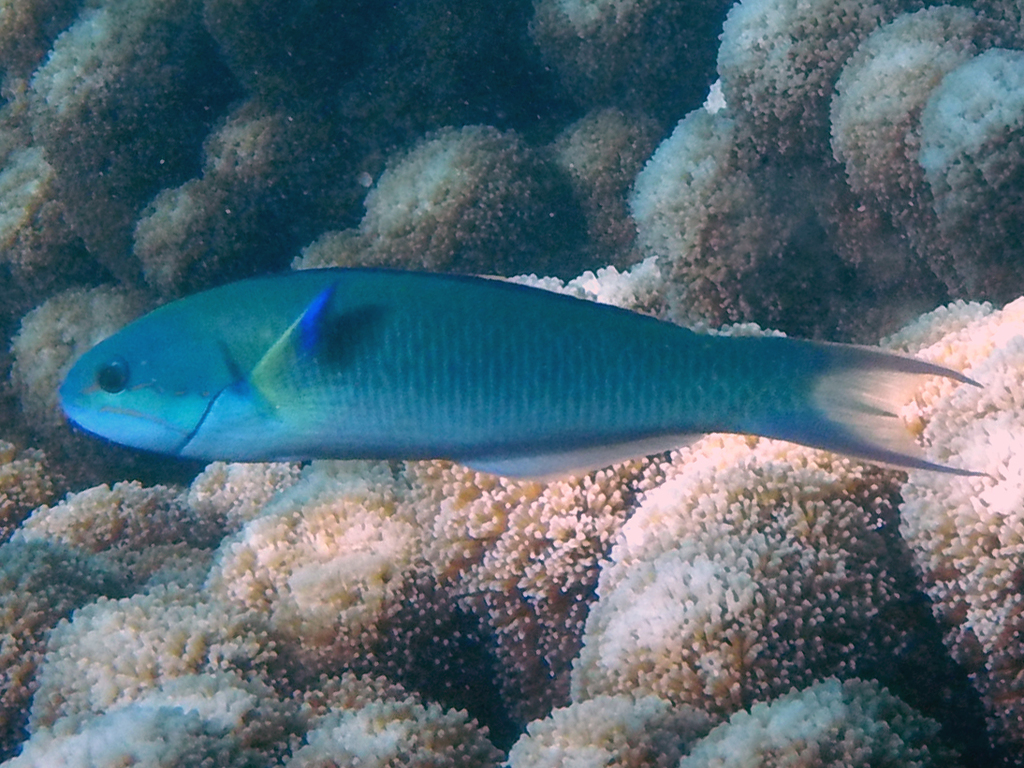 Bluntheaded wrasse
Thalassoma amblycephalum
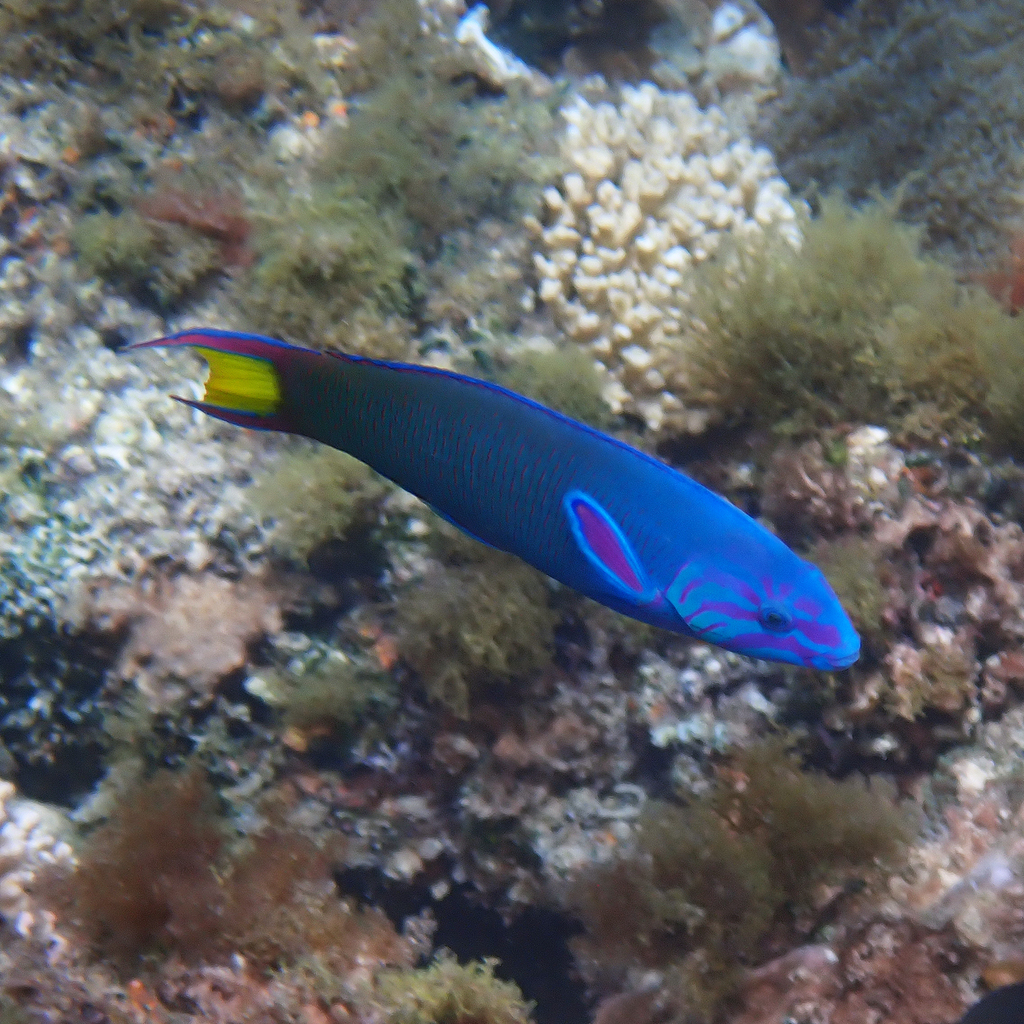 Moon wrasse
Thalassoma lunare
- Parrotfish
Thalassoma hardwicke
- Blue-fin Wrasse
Thalassoma lutescens
- blackspot wrasse
Thalassoma quinquevittatum
- Jansen's Wrasse
Thalassoma jansenii
Sources and credits
Names and taxonomy: WoRMS (CC BY 4.0) and the GBIF Backbone (CC BY 4.0). Photos: iNaturalist observers, each under the licence shown (CC0, CC BY or CC BY-SA).
- Depth, temperature, months and maps: records from OBIS and GBIF under CC0 or CC BY.
- Descriptions: Wikipedia, licensed CC BY-SA, each linked to its article.
- Conservation status as published by GBIF (IUCN Red List).
- 2,718 open-data records from 1901 to 2023.
Log what you see on your next dive
The free DiveHive diver app keeps your logbook with every sighting and shows what lives at the site you dive next.