
Daruma Stinger
Erosa erosa
- Usual depth37–79 m
- Water temperature20–29 °C
- Best monthsMay, September, and November
- How commonOccasional
About this species
The pitted stonefish, also known as the Pacific monkey-fish, is a species of venomous ray-finned fish, a stonefish be longing to the subfamily Synanceiinae of the family Scorpaenidae, the scorpionfishes and their relatives. It is the only species in the monotypic genus Erosa and is found in the eastern Indian Ocean and the western Pacific Ocean.
Text from the Wikipedia article “Pitted stonefish”, licensed CC BY-SA 4.0. Read the article
Where and when
Where it has been recorded
Worldwide
Loading the map
Best months
Worldwide (open data)
- January: 4 records
- February: 17 records
- March: 16 records
- April: 23 records
- May: 27 records
- June: 21 records
- July: 8 records
- August: 17 records
- September: 39 records
- October: 21 records
- November: 45 records
- December: 14 records
Depth and water temperature
Depth
Mostly recorded at 37–79 m · Deepest record: 187 m
Water temperature
Recorded in surface water of 20–29 °C
Names and classification
- English
- Daruma Stinger, monkeyfish, Monkey-fish, Pacific Monkeyfish, Pitted Scorpionfish, Pitted stonefish
Names in 2 more languages
- Japanese
- Darumaokoze, ダルマオコゼ
- Simplified Chinese
- 沙薑虎, 獅頭毒鮋, 獅頭鮋, 石虎, 石頭魚, 虎魚, 達摩毒鮋
Other scientific names: Synanceia erosa
Similar species
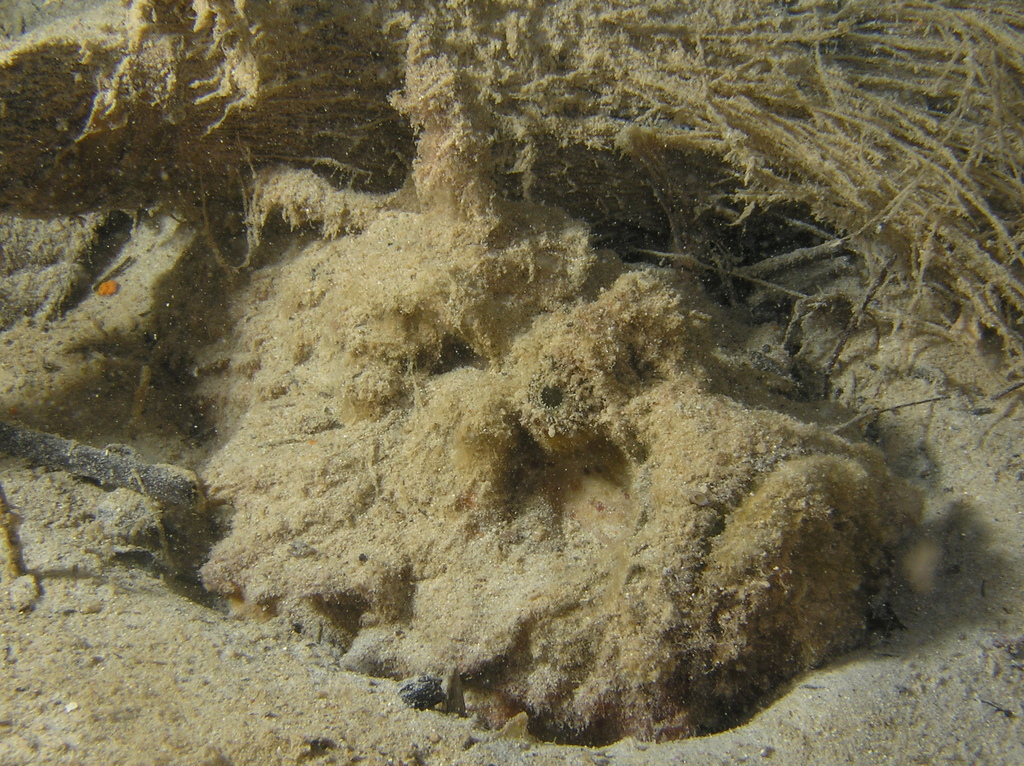
 Stonefish
Synanceia verrucosa
- Bearded Ghoul
Inimicus caledonicus
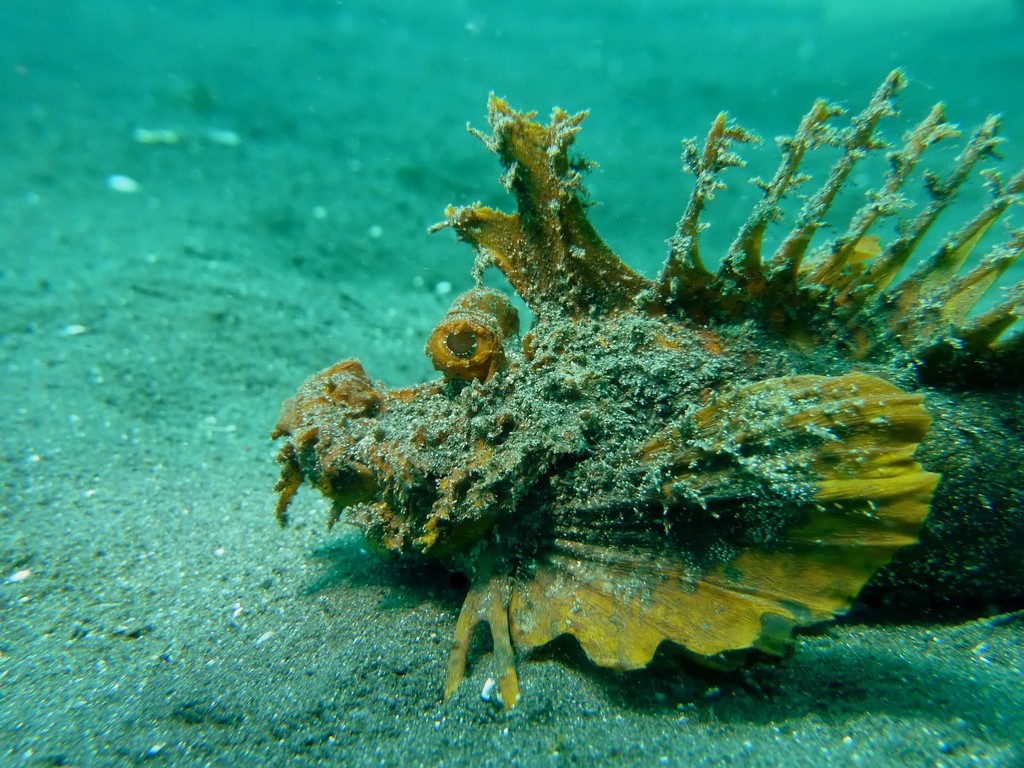 Bearded Ghoul
Inimicus didactylus
 Two-stick stingfish
Inimicus filamentosus
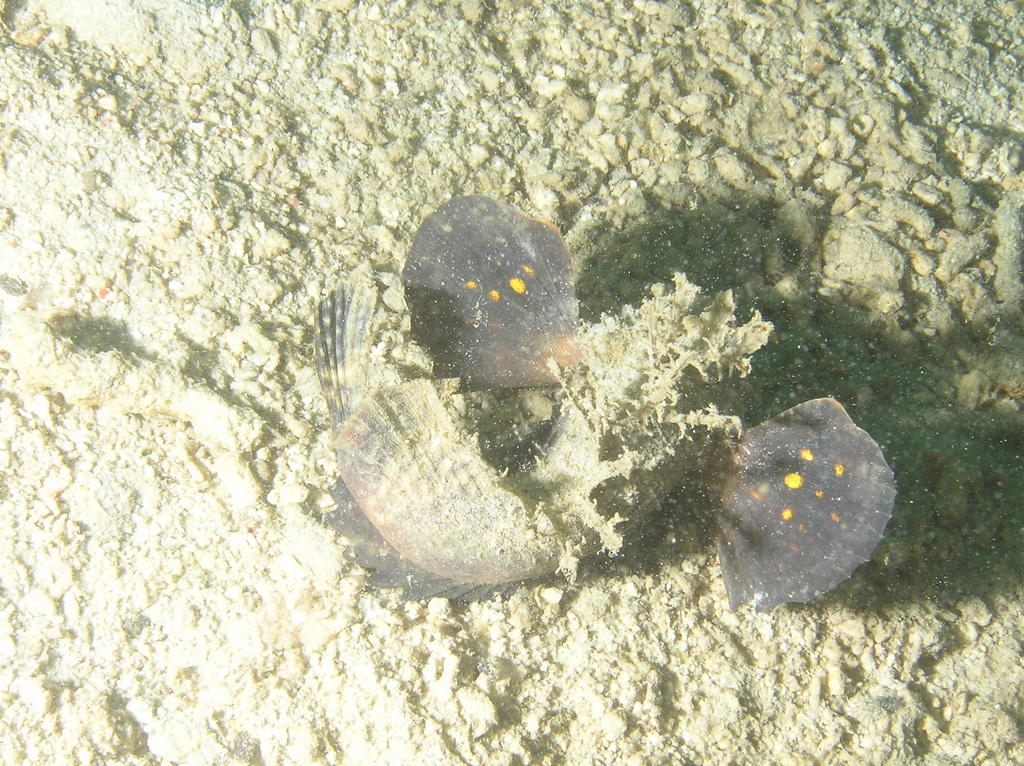 Spotted ghoul
Inimicus sinensis
Sources and credits
Names and taxonomy: WoRMS (CC BY 4.0) and the GBIF Backbone (CC BY 4.0). Photos: iNaturalist observers, each under the licence shown (CC0, CC BY or CC BY-SA).
- Depth, temperature, months and maps: records from OBIS and GBIF under CC0 or CC BY.
- Descriptions: Wikipedia, licensed CC BY-SA, each linked to its article.
- Conservation status as published by GBIF (IUCN Red List).
- 380 open-data records from 1919 to 2017.
- Species data updated November 2, 2026.
Log what you see on your next dive
The free DiveHive diver app keeps your logbook with every sighting and shows what lives at the site you dive next.