
DiscoverSpeciesSharks and rays
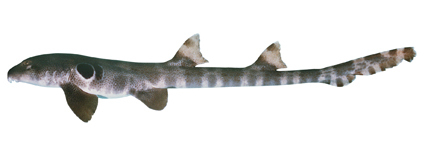
Cat shark
Hemiscyllium trispeculare
- Usual depth0–6 m
- Water temperature23–29 °C
- Best monthsAugust and October
- How commonRare
Photo credit: (c) John E. Randall, some rights reserved (CC BY) · CC BY · iNaturalist
About this species
The speckled carpetshark, Hemiscyllium trispeculare, is a bamboo shark in the family Hemiscylliidae found around north and west Australia between latitudes 8° S and 22° S, and longitude 114° E and 152° E. Its length is up to 79 cm, and it inhabits shallow coral reefs. It is also kept in aquaria. The speckled carpetshark is closely related to the epaulette shark
Text from the Wikipedia article “Speckled carpetshark”, licensed CC BY-SA 4.0. Read the article
Where and when
Where it has been recorded
Worldwide
Loading the map
Best months
Worldwide (open data)
- January: 1 records
- February: 1 records
- March: 2 records
- April: 4 records
- May: 5 records
- June: 2 records
- July: 3 records
- August: 6 records
- September: 4 records
- October: 9 records
- November: 4 records
- December: 5 records
Depth and water temperature
Depth
Mostly recorded at 0–6 m · Deepest record: 6 m
Water temperature
Recorded in surface water of 23–29 °C
Names and classification
- English
- Cat shark, Speckled carpet shark, Speckled catshark, cat shark, Marbled Catshark, speckled carpet shark, speckled carpetshark, speckled catshark, Speckled Cat-shark
Names in 5 more languages
- German
- Gefleckter Epaulettenhai, Gepunkteter Epaulettenhai
- Spanish
- bamboa moteada
- French
- requin-chabot marquéterie
- Japanese
- モンツキテンジクザメ
- Simplified Chinese
- 項斑長尾鬚鯊
Other scientific names: Chiloscyllium trispeculare
Similar species
 Epaulette shark
Hemiscyllium ocellatum
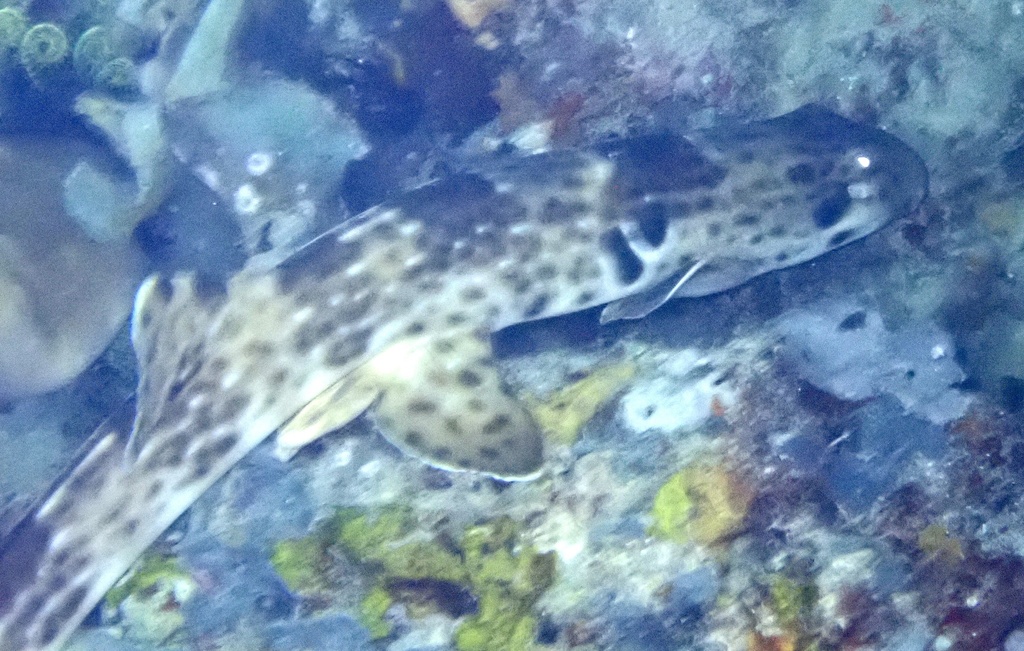 Freckled carpet shark
Hemiscyllium freycineti
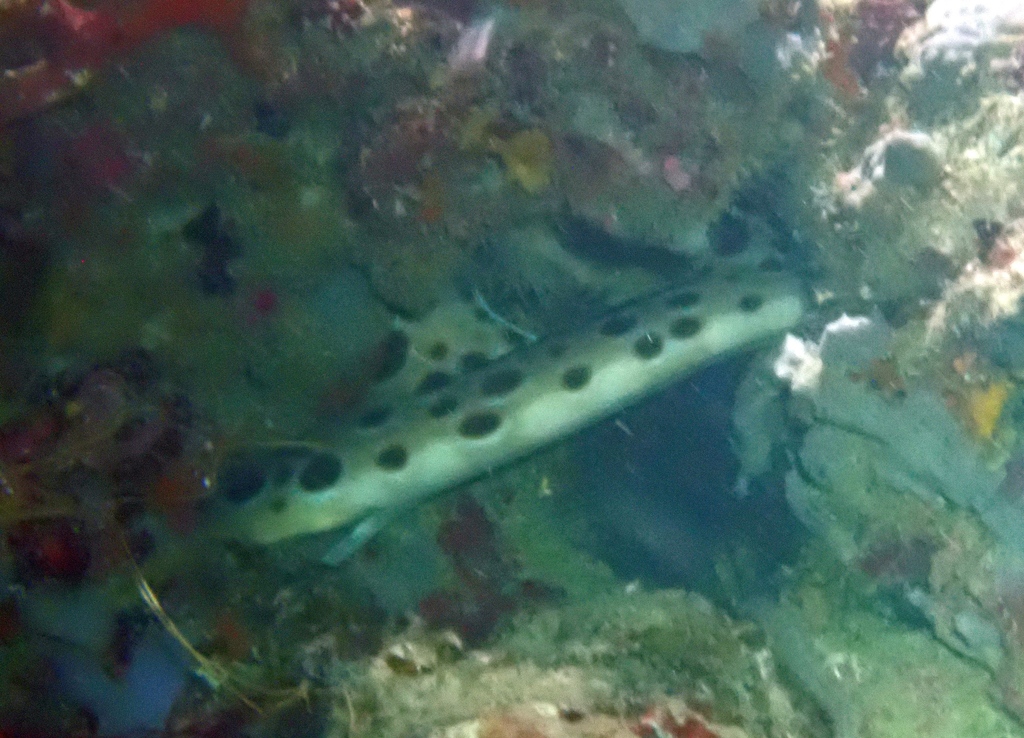 Papuan epaulette shark
Hemiscyllium hallstromi
- Leopard Epaulette shark
Hemiscyllium michaeli
- Hooded carpet shark
Hemiscyllium strahani
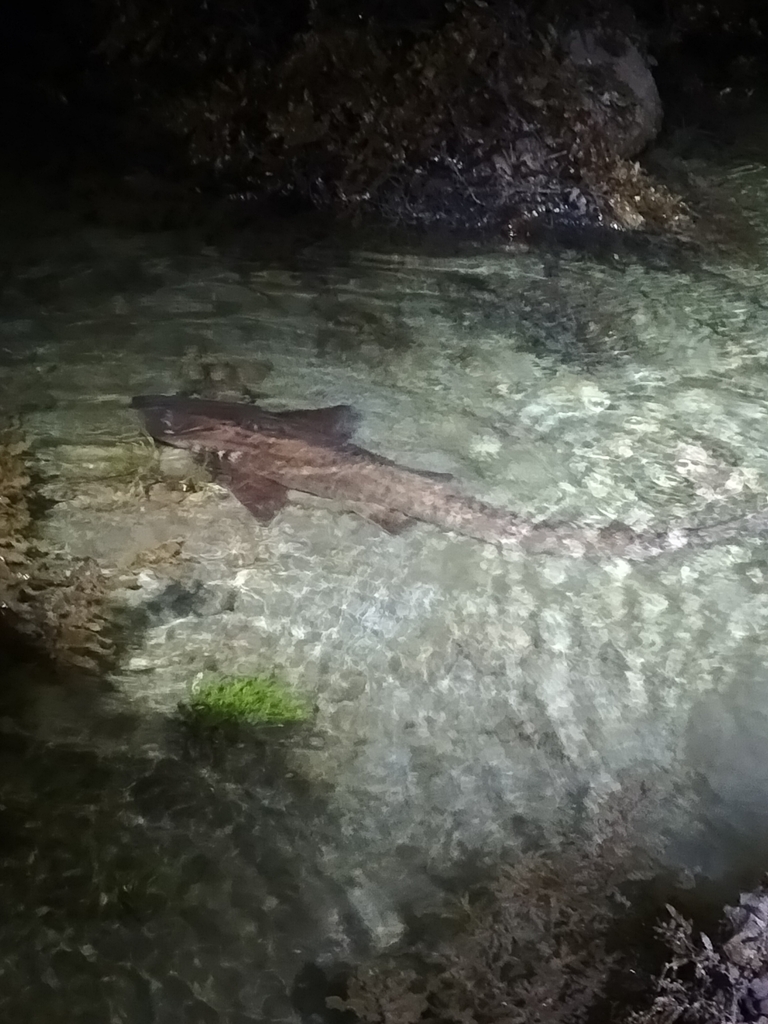 Brownbanded bamboo shark
Chiloscyllium punctatum
Sources and credits
Names and taxonomy: WoRMS (CC BY 4.0) and the GBIF Backbone (CC BY 4.0). Photos: iNaturalist observers, each under the licence shown (CC0, CC BY or CC BY-SA).
- Depth, temperature, months and maps: records from OBIS and GBIF under CC0 or CC BY.
- Descriptions: Wikipedia, licensed CC BY-SA, each linked to its article.
- Conservation status as published by GBIF (IUCN Red List).
- 59 open-data records from 1954 to 2024.
- Species data updated November 3, 2026.
Log what you see on your next dive
The free DiveHive diver app keeps your logbook with every sighting and shows what lives at the site you dive next.